


Islamic Cairo is one of the most fascinating areas in Egypt for travelers interested in history, architecture, religion, and local culture. Located in the heart of Cairo, this historic district contains centuries-old mosques, madrasas, gates, markets, traditional houses, and narrow streets that preserve the character of medieval Cairo.
Despite its name, Islamic Cairo is not simply a collection of religious buildings. It is a living historic district where ancient architecture exists alongside shops, cafés, restaurants, and everyday Egyptian life.
For visitors looking to discover a different side of Cairo beyond the pyramids, Islamic Cairo is an essential destination.
What Is Islamic Cairo?
Islamic Cairo refers to the historic area of Cairo containing a remarkable concentration of Islamic monuments and medieval architecture.
The district developed over many centuries under different Islamic dynasties, including the Fatimids, Ayyubids, Mamluks, and Ottomans.
Today, the area is recognized for its outstanding cultural and architectural heritage and is one of the most important historic districts in Egypt.
Walking through its streets gives visitors the opportunity to see historic mosques, schools, mausoleums, markets, and houses within a relatively compact area.
The History of Islamic Cairo
The history of Islamic Cairo is closely connected with the development of the city itself.
Cairo was founded in the 10th century during the Fatimid period. The new city became an important political and religious center, and its influence continued to grow over the centuries.
Later rulers expanded the city and built magnificent mosques, educational institutions, palaces, and defensive structures.
The Mamluk period was particularly important for Cairo’s architecture. Many of the beautiful monuments seen today were constructed or developed during this era.
The result is a historic landscape containing buildings from different periods, each contributing to Cairo’s unique identity.
Al-Azhar Mosque
One of the most important landmarks in Islamic Cairo is Al-Azhar Mosque.
Founded during the Fatimid period, Al-Azhar became one of the world’s most famous centers of Islamic learning.
The mosque’s architecture has developed over centuries, incorporating elements from different periods of Egyptian history.
Visitors can admire its courtyards, prayer halls, columns, and Islamic architectural details while learning about its long religious and educational history.
Cairo Citadel
The Citadel of Cairo is another major attraction associated with Islamic Cairo.
The fortress was established by Salah al-Din, also known as Saladin, in the 12th century as part of Cairo’s defensive system.
The Citadel later became an important center of government and royal power.
Today, visitors can explore the historic fortress and enjoy panoramic views across Cairo.
One of its most famous buildings is the Mosque of Muhammad Ali, known for its impressive Ottoman-inspired architecture and prominent domes and minarets.
Mosque of Muhammad Ali
The Mosque of Muhammad Ali is one of Cairo’s most recognizable landmarks.
Built during the 19th century inside the Citadel, the mosque features large domes, elegant minarets, and a spacious interior decorated with Islamic architectural details.
Its elevated location provides impressive views over Cairo.
The mosque is an important stop for visitors exploring the Citadel and is particularly popular with photographers.
Historic Mosques and Madrasas
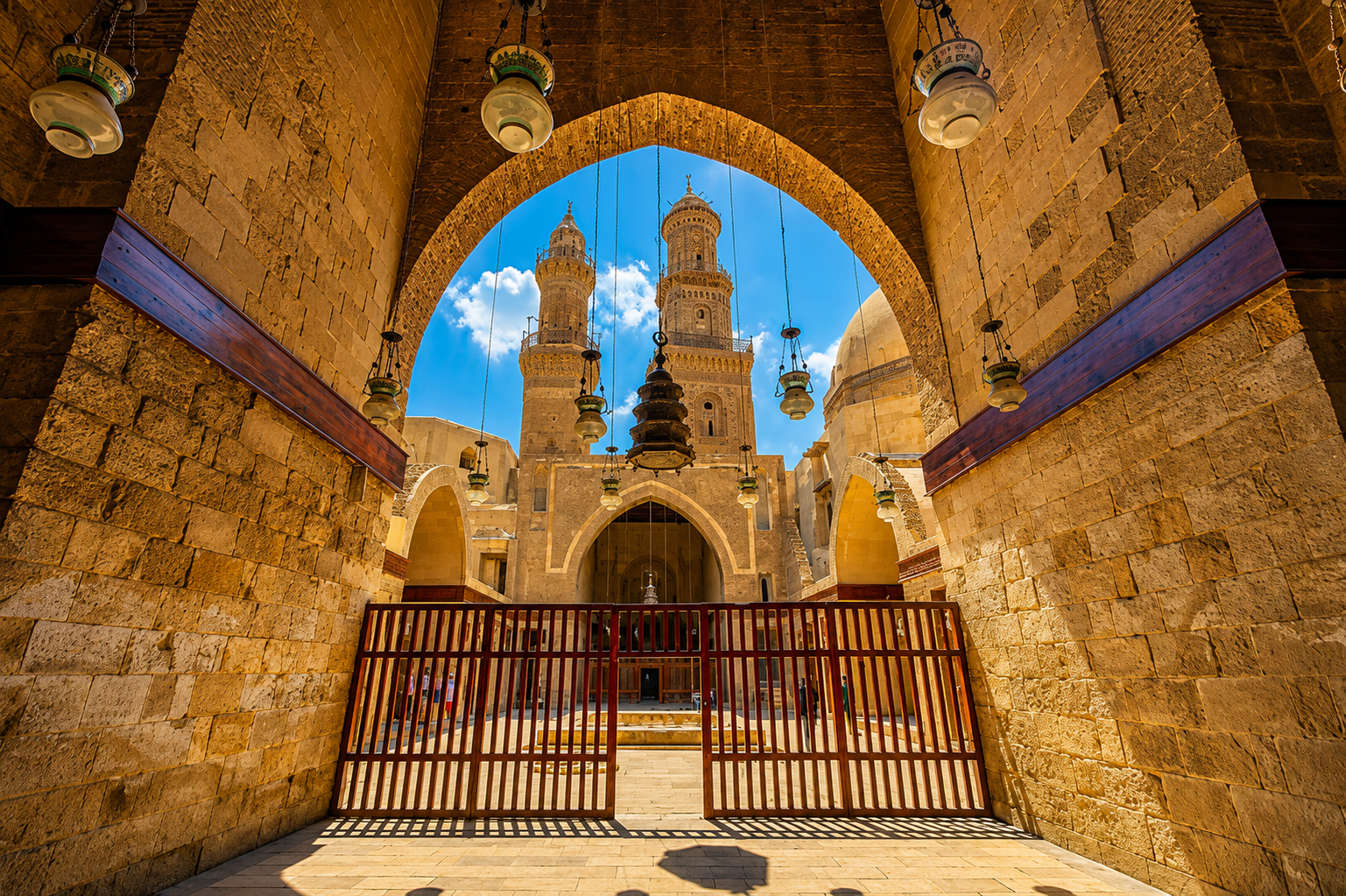
Islamic Cairo contains numerous historic mosques and madrasas.
Many were built during the Mamluk period when Cairo became one of the most important centers of Islamic scholarship and architecture.
Visitors can find buildings decorated with carved stone, geometric patterns, Arabic inscriptions, domes, arches, and minarets.
Each monument tells part of the story of the rulers, scholars, architects, and craftsmen who shaped medieval Cairo.
Bab Zuweila
Bab Zuweila is one of the most famous surviving gates of medieval Cairo.
It was part of the city’s historic defensive walls and provides visitors with a connection to the Fatimid era.
The gate’s towers and architectural details demonstrate the importance of Cairo’s medieval fortifications.
The surrounding area is also filled with traditional streets, shops, and historic buildings.
Al-Muizz Street
One of the best places to experience Islamic Cairo is Al-Muizz Street.
The street contains a remarkable concentration of historic Islamic monuments, making it one of the most rewarding walking routes in the city.
Visitors can admire medieval architecture while exploring traditional markets and local streets.
The atmosphere changes throughout the day, with the area becoming particularly lively in the evening.
Khan El Khalili Bazaar
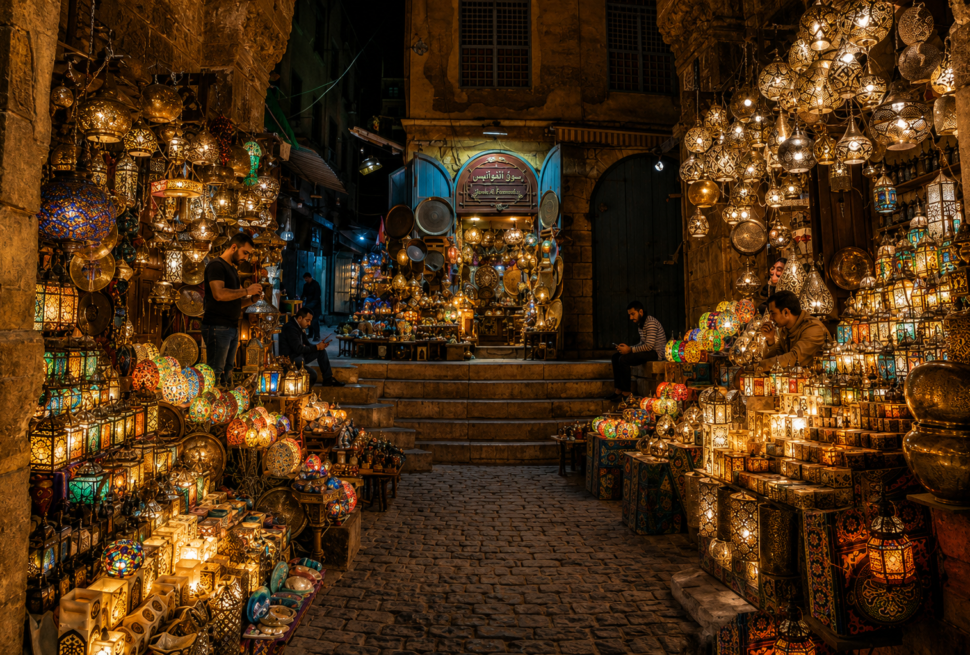
Islamic Cairo is also home to Khan El Khalili, Cairo’s most famous traditional market.
The bazaar contains hundreds of shops selling souvenirs, jewelry, spices, traditional crafts, textiles, lamps, perfumes, and other products.
Visitors can combine sightseeing with shopping and stop at traditional cafés for Egyptian tea, coffee, or other local drinks.
Khan El Khalili is one of the best places in Cairo to experience the energy of a traditional Egyptian marketplace.
Islamic Cairo at Night
Islamic Cairo can be especially atmospheric after sunset.
Historic buildings become illuminated, cafés fill with visitors and local residents, and the narrow streets become lively.
An evening walk through Al-Muizz Street and Khan El Khalili can provide a memorable experience.
Visitors should still remain aware of their surroundings in crowded areas and keep personal belongings secure.
What to See in Islamic Cairo
Some of the most important attractions in and around Islamic Cairo include:
- Al-Azhar Mosque
- Cairo Citadel
- Mosque of Muhammad Ali
- Al-Muizz Street
- Bab Zuweila
- Khan El Khalili
- Sultan Hassan Mosque
- Al-Rifa’i Mosque
- Historic Mamluk monuments
- Traditional markets and cafés
The exact attractions included in a tour can be adapted depending on the visitor’s interests and available time.
Best Time to Visit Islamic Cairo
The cooler months from October to April are generally comfortable for walking through the historic district.
During summer, temperatures can become high, so morning or late-afternoon visits are often more comfortable.
Evening is another excellent time to explore areas such as Al-Muizz Street and Khan El Khalili.
Comfortable walking shoes are strongly recommended because much of the experience involves walking through historic streets.
How Long Do You Need in Islamic Cairo?
A basic visit can take around 3–4 hours, but travelers interested in architecture and history may want to spend a full day exploring the area.
A half-day itinerary can focus on the Citadel, major mosques, and Khan El Khalili.
A full-day Islamic Cairo experience can include more historic monuments, Al-Muizz Street, traditional markets, and additional cultural stops.
Dress Code for Islamic Cairo
Visitors should dress respectfully when visiting mosques and religious sites.
Clothing that covers the shoulders and knees is recommended. Women may be asked to cover their hair when entering certain religious sites, depending on the location’s current visitor requirements.
Shoes may need to be removed before entering some prayer areas.
Why Visit Islamic Cairo?
Islamic Cairo provides a completely different experience from the Giza Pyramids.
The pyramids introduce visitors to ancient Egypt, while Islamic Cairo reveals another important chapter of Egyptian history spanning more than a thousand years.
The district combines architecture, religion, commerce, art, and everyday life.
For travelers who want to understand Cairo’s cultural identity, Islamic Cairo is one of the most rewarding areas to explore.
Explore Islamic Cairo with My Cairo Trips
With My Cairo Trips, you can discover the historic heart of Cairo through a private Islamic Cairo tour.
Explore the Cairo Citadel, Mosque of Muhammad Ali, Al-Azhar Mosque, Al-Muizz Street, and Khan El Khalili, while learning about the rulers, architects, scholars, and communities that shaped the city.
A knowledgeable Egyptologist guide can explain the history behind the monuments and help you understand the differences between Fatimid, Mamluk, Ottoman, and other architectural influences.
Private transportation also makes it easy to combine Islamic Cairo with other attractions, including Coptic Cairo, the Egyptian Museum, or the Giza Pyramids.
Plan Your Islamic Cairo Tour
Islamic Cairo is a destination where history remains part of everyday life.
Its magnificent mosques, medieval streets, traditional markets, historic gates, and lively cafés create an experience that goes far beyond sightseeing.
Whether you are interested in Islamic architecture, Egyptian history, photography, shopping, or local culture, exploring the historic heart of Cairo is an experience worth adding to your Egypt itinerary.
Discover Islamic Cairo with My Cairo Trips and experience the history, architecture, and culture of one of the world’s most remarkable historic cities.
SEO Meta Description
Explore Islamic Cairo with My Cairo Trips. Discover historic mosques, Cairo Citadel, Al-Muizz Street, Al-Azhar Mosque, Khan El Khalili, and medieval Cairo.