


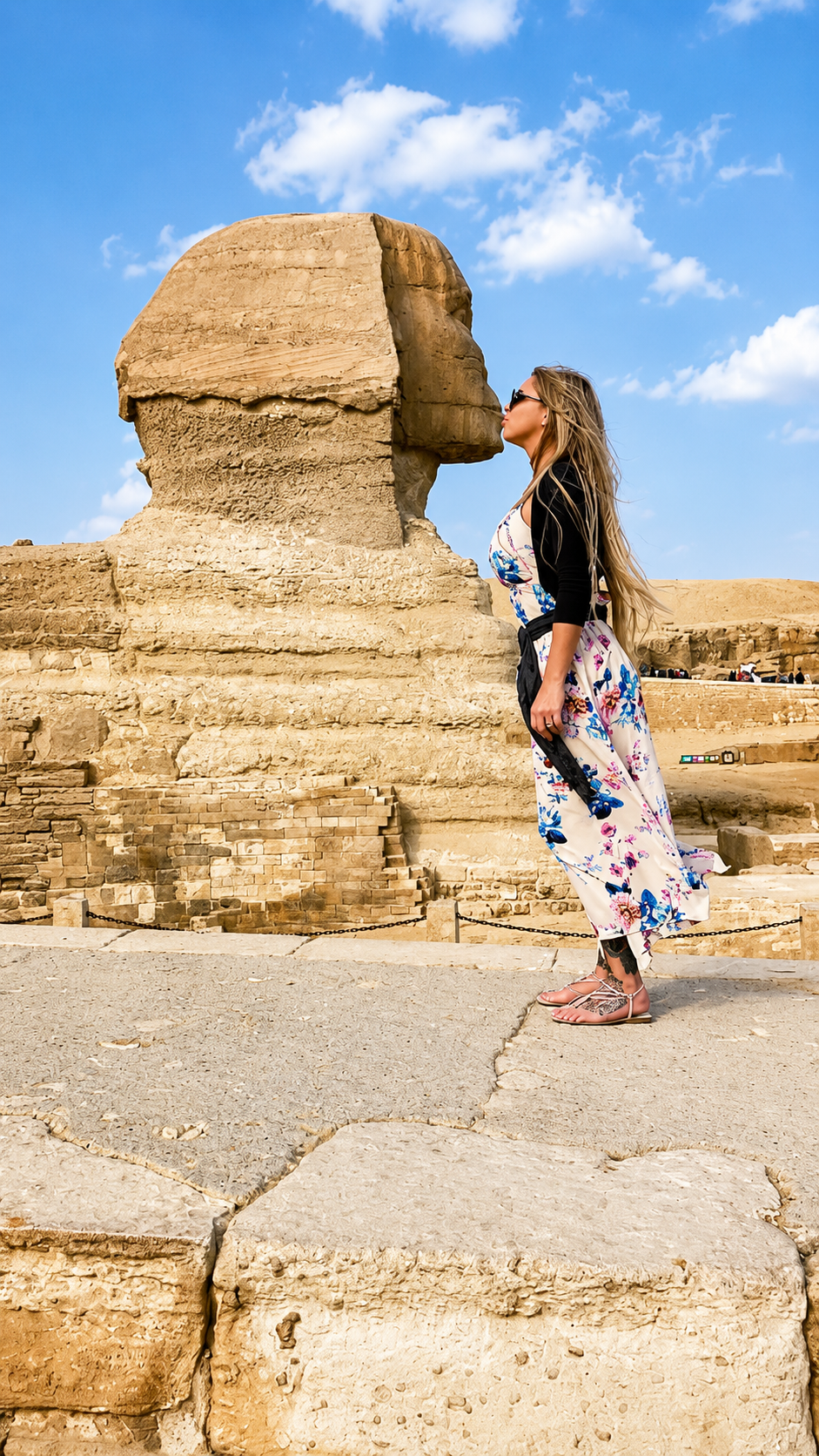
The Great Sphinx of Giza is one of the most iconic monuments in Egypt and one of the world’s most recognizable ancient statues. Located on the Giza Plateau beside the famous pyramids, the Sphinx has fascinated travelers, historians, and archaeologists for thousands of years.
With its monumental lion’s body and human head, the Great Sphinx represents the power and authority of ancient Egyptian kings. Visiting this extraordinary monument is an essential part of any Cairo or Giza tour.
Where Is the Great Sphinx?
The Great Sphinx stands on the Giza Pyramids , near the Pyramid of Khafre and the Great Pyramid of Khufu. Its location makes it easy to visit together with the three major pyramids during a full-day Giza sightseeing tour.
The Sphinx was carved directly from the natural limestone bedrock of the plateau. Its enormous size and distinctive design make it one of the most impressive surviving monuments from ancient Egypt.
Who Built the Great Sphinx?
The Great Sphinx is generally associated with Pharaoh Khafre, who ruled during Egypt’s Fourth Dynasty. Many Egyptologists believe it was constructed around the same period as Khafre’s pyramid and funerary complex, approximately 4,500 years ago.
However, some details about the monument’s original construction and purpose remain subjects of archaeological discussion.
What Does the Sphinx Represent?
The Great Sphinx combines the body of a lion with a human head. In ancient Egyptian culture, lions were associated with strength, protection, and royal power, while the human face represented intelligence and kingship.
The monument is therefore commonly understood as a symbolic representation of royal authority and protection.
The Face of the Sphinx
One of the most fascinating features of the Great Sphinx is its human face. It is traditionally believed to represent Pharaoh Khafre, although researchers continue to examine the monument’s features and historical evidence.
The Sphinx originally had a ceremonial beard and a royal headdress. Parts of the beard are now preserved in museums, while the headdress remains visible on the monument.
The Missing Nose
The missing nose of the Great Sphinx is one of the most famous mysteries associated with the monument.
Contrary to some popular stories, there is no reliable evidence that Napoleon’s soldiers destroyed the nose. Historical drawings created before Napoleon’s arrival in Egypt already show the Sphinx without its nose.
The exact circumstances surrounding its loss remain uncertain.
How Large Is the Great Sphinx?
The Great Sphinx is approximately 73 meters long and about 20 meters high. Its enormous proportions become especially impressive when viewed from ground level.
Much of the statue was carved from the limestone bedrock, while some sections were constructed or repaired using additional stone blocks.
The Sphinx and the Pyramids
The Great Sphinx is closely connected to the Giza pyramids. During your visit, you can see the Sphinx alongside the Pyramid of Khafre, creating one of the most famous archaeological landscapes in the world.
Many travelers choose to visit the pyramids first and then continue to the Sphinx area, where they can learn about the relationship between the royal monuments and the ancient funerary complex.
Why Was the Sphinx Built?
The exact original purpose of the Great Sphinx is not completely understood. It is generally believed to have had a religious and symbolic role, possibly protecting the nearby royal complex.
Its position near the temples associated with Khafre suggests that it was an important part of the religious landscape surrounding the pyramid.
The Dream Stele
Another fascinating monument associated with the Sphinx is the Dream Stele, located between its front paws.
The stele was placed by Pharaoh Thutmose IV many centuries after the Sphinx was constructed. Its inscription tells the story of a dream in which the Sphinx promised Thutmose kingship if he cleared the sand covering the monument.
The story provides valuable evidence about how later ancient Egyptians viewed and revered the Sphinx.
Best Time to Visit the Sphinx
The cooler months between October and April are generally comfortable for exploring the Giza Plateau. During the warmer months, visiting early in the morning is recommended.
Morning visits can also provide better lighting for photography and a more comfortable sightseeing experience.
Wear comfortable shoes, bring water, and use sunscreen, especially if you plan to explore the surrounding pyramid complex on foot.
How Long Should You Spend at the Sphinx?
Most visitors spend around 30–60 minutes around the Sphinx, although the exact amount of time depends on your interests and the overall Giza itinerary.
If you are visiting the pyramids, Sphinx, viewpoints, and other archaeological areas, it is best to allow several hours for the complete Giza experience.
Visiting the Great Sphinx with My Cairo Trips
The Great Sphinx is much more than a famous photograph. It is a remarkable surviving monument that offers a glimpse into the beliefs, power, and artistic achievements of ancient Egypt.
With My Cairo Trips, you can explore the Great Sphinx as part of a private Giza and Cairo experience accompanied by an experienced Egyptologist guide. Learn about the pharaohs, ancient Egyptian religion, pyramid construction, and the mysteries that continue to surround this extraordinary monument.
Whether you are visiting Egypt for the first time or returning to discover its ancient treasures, standing before the Great Sphinx is an experience you will remember for years to come.