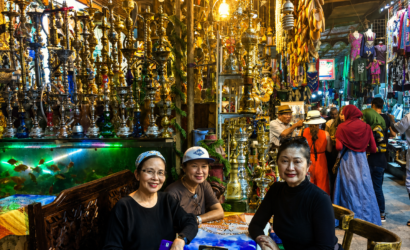



Overview
Step beyond Cairo’s famous landmarks and discover the city’s ancient streets, medieval architecture, historic mosques, traditional markets, and hidden corners on a private cultural walking tour. Explore the heart of Old Cairo and Islamic Cairo with a professional Egyptologist, passing through centuries-old lanes and discovering the stories behind the city’s monuments, craftsmanship, and daily life.
Highlights
- Historic Islamic Cairo
- Al-Muizz Street
- Bab al-Futuhح
- Bab Zuweila
- Al-Azhar Mosque
- Sultan Hassan Mosque
- Al-Rifa'i Mosque
- Historic medieval streets
- Khan El Khalili Bazaar
- Traditional crafts and local shops
- Hidden courtyards and architectural details
- Local Egyptian atmosphere
- Professional Egyptologist guide
- Private transportation
- Optional traditional Egyptian lunch
Itinerary Description
Discover the soul of Cairo on a private journey through Islamic Cairo and its medieval streets. Begin with the historic gates of the old city and walk along Al-Muizz Street, surrounded by centuries-old mosques, madrasas, houses, and traditional workshops. Continue to Al-Azhar Mosque, then explore the magnificent Sultan Hassan and Al-Rifa'i Mosques before entering the lively lanes of Khan El Khalili Bazaar. Finish your experience with time to explore local crafts, traditional cafés, and the atmosphere of old Cairo before returning to your hotel.
09:00 AM – Hotel Pickup: Pickup from your hotel in Cairo or Giza and transfer to Historic Cairo.
Bab al-Futuh: Begin your journey near one of the historic gates of medieval Cairo and learn about the old city walls and defenses.
Al-Muizz Street: Walk along one of Historic Cairo’s most atmospheric streets, surrounded by historic mosques, madrasas, houses, and traditional architecture.
Al-Azhar Area: Visit the historic Al-Azhar Mosque and explore the surrounding streets and architectural landmarks.
Sultan Hassan Mosque: Discover the monumental mosque and madrasa complex and learn about Mamluk architecture.
Al-Rifa'i Mosque: Visit the richly decorated mosque opposite Sultan Hassan and hear about its historical and architectural significance.
Local Streets & Crafts: Continue through quieter lanes where traditional craftsmen and small workshops can still be found.
Khan El Khalili: Explore the famous bazaar, browse traditional crafts, spices, souvenirs, jewelry, and local products.
Lunch – Optional: Enjoy a traditional Egyptian meal at a local restaurant.
Return: Transfer back to your hotel in Cairo or Giza.
Includes/Excludes
Includes
- Airport pickup and drop-off
- Private air-conditioned vehicle
- Professional English-speaking Egyptologist
- Giza Pyramids visit
- Great Sphinx visit
- Saqqara visit
- Step Pyramid of Djoser
- Entrance tickets according to the selected package
- Bottled water
- Private sightseeing experience
- All transfers mentioned in the itinerary
Excludes
- Entrance inside the Great Pyramid or other optional sites
- Lunch
- Drinks
- Personal expenses
- Optional activities
- Tips and gratuities
- Travel insurance
- Any service not specifically mentioned under Includes
More Info
Cairo’s Ancient Streets & Medieval Secrets
Cairo is much more than the pyramids.
Beyond the famous monuments and modern city streets lies another Cairo—a city of medieval gates, narrow alleys, historic mosques, traditional houses, old markets, craftsmen’s workshops, and centuries-old stories.
Walking through Historic Cairo is one of the best ways to experience the city at street level. The area preserves architectural and cultural layers from the Fatimid, Ayyubid, Mamluk, Ottoman, and later periods. Historic Cairo is also recognized as a UNESCO World Heritage Site. Experience Egypt
This is where Cairo’s history feels alive.
Walking Through Medieval Cairo
A journey through Cairo’s ancient streets can begin around Bab Al-Futuh, one of the historic gates of Fatimid Cairo.
Built in 1087 under the Fatimid ruler Al-Mustansir and his powerful vizier Badr Al-Gamali, Bab Al-Futuh formed part of the stone defensive walls surrounding the city. Its massive towers and detailed stonework reveal the importance of Cairo’s medieval fortifications. آثار مصر
From here, travelers can continue toward the heart of Historic Cairo along Al-Muizz Street.
The street stretches between Bab Al-Futuh in the north and Bab Zuweila in the south. Today, it contains an extraordinary concentration of historic buildings, with monuments representing different periods of Islamic Cairo. آثار مصر
Al-Muizz Street: Cairo’s Open-Air Museum
Al-Muizz Street is one of the most fascinating places to explore in Cairo.
The street contains mosques, madrasas, mausoleums, traditional houses, sabils, commercial buildings, and defensive structures.
The Ministry of Tourism and Antiquities identifies 29 monuments along the historic street, representing architecture from the Fatimid period through the Muhammad Ali dynasty. آثار مصر
But the attraction is not only the monuments.
Between the historic buildings, you will find shops, local markets, traditional crafts, cafés, and everyday Cairo life.
This combination of ancient architecture and modern activity makes walking along Al-Muizz very different from visiting a conventional archaeological site.
Discover the Hidden Alleys
Some of the most interesting experiences are found away from the main street.
Historic Cairo contains narrow lanes and small passages where traditional architecture has survived between modern buildings.
Walk slowly and look at the details.
You may notice carved wooden doors, stone inscriptions, mashrabiyas, old balconies, decorative façades, and small courtyards hidden behind simple entrances.
These details reveal how Cairo once functioned as a dense medieval city.
Bayt Al-Suhaymi
One of the most fascinating historic houses in the area is Bayt Al-Suhaymi, located in the Darb Al-Asfar area.
The house provides an excellent example of traditional Cairene domestic architecture.
Unlike a monumental mosque or palace, a historic house can tell you how people actually lived.
Traditional reception rooms, courtyards, wooden screens, and architectural features demonstrate how homes were designed around privacy, climate, family life, and social traditions.
For visitors interested in architecture, Bayt Al-Suhaymi offers a different perspective on Cairo’s history.
Medieval Mosques and Madrasas
As you continue through the ancient streets, historic mosques and madrasas appear throughout the neighborhood.
These buildings were not simply places of worship.
Many also served educational, charitable, social, or commemorative functions.
The Madrasa and Mausoleum of Al-Salih Najm Al-Din Ayyub, for example, dates to the Ayyubid period and was established in 1243. It was notable for teaching the four Sunni schools of jurisprudence. آثار مصر
The architecture therefore tells a story about both religion and education.
The Qalawun Complex
The Qalawun Complex is another important monument in the historic district.
The complex reflects the architectural and political ambitions of the Mamluk period.
Its functions included religious, educational, charitable, and commemorative purposes.
Walking through this part of Cairo allows visitors to understand how medieval rulers used architecture to establish institutions that served multiple aspects of society.
Sultan Barquq and Mamluk Cairo
The Mamluk period transformed Cairo’s skyline.
Sultans and wealthy patrons built enormous mosques, madrasas, mausoleums, markets, and charitable foundations.
The result was a city filled with domes, minarets, monumental entrances, decorated stone façades, and elaborate interiors.
One of the most impressive examples is the Sultan Barquq Complex on Al-Muizz Street.
The surrounding architecture demonstrates the sophistication of Mamluk Cairo and the importance placed on craftsmanship and monumental design.
Khan El-Khalili
No exploration of Cairo’s medieval streets would be complete without visiting Khan El-Khalili.
The historic bazaar is one of the city’s most famous areas, filled with narrow passages, traditional shops, cafés, craftsmen, jewelry, spices, souvenirs, textiles, and other goods.
But Khan El-Khalili is more than a shopping destination.
It represents Cairo’s long commercial tradition.
For centuries, merchants and craftsmen have been an essential part of the city’s identity.
Today, visitors can walk through the same type of dense market environment that has characterized this part of Cairo for generations.
Traditional Crafts
One of the pleasures of exploring Historic Cairo is seeing craftsmen working in small workshops.
Depending on the area and time of your visit, you may see traditional work involving metal, wood, textiles, leather, and other materials.
These workshops add another dimension to the historic experience.
You are not simply looking at old buildings—you are seeing traditional skills continuing in the modern city.
Bab Zuweila
Continue south and you eventually reach Bab Zuweila, one of the most important surviving gates of Fatimid Cairo.
The gate was constructed in 1092 by Badr Al-Gamali during the reign of Caliph Al-Mustansir. It consists of two large towers with the entrance positioned between them. آثار مصر
Centuries later, the Mamluk Sultan Al-Mu’ayyad Shaykh used the bases of the two towers to support the minarets of his adjacent mosque.
This is a perfect example of how different periods of Cairo’s history overlap in the same location.
The Sultan Al-Ghuri Complex
Another remarkable monument in the area is the Sultan Al-Ghuri Complex.
Constructed between 1503 and 1504, the complex included a mosque, madrasa, mausoleum, Sufi lodge, sabil, Quranic school, and dormitory. A wooden roof spanning the street connects parts of the complex and shelters a traditional market area. آثار مصر
The complex demonstrates how religious, educational, commercial, and social activities were interconnected in historic Cairo.
The Secrets of Al-Saliba Street
Historic Cairo extends beyond Al-Muizz Street.
Al-Saliba Street is another fascinating historic route, with preserved mosques, schools, sabils, hammams, khanqahs, and palaces.
The street was historically associated with ceremonial processions and important public activities. Experience Egypt
Exploring this area gives travelers an opportunity to discover a quieter side of Cairo’s architectural heritage.
Ibn Tulun Mosque
Another important stop is the Ibn Tulun Mosque, one of Cairo’s most distinctive historic mosques.
Its enormous courtyard, geometric decorations, arches, and famous spiral minaret make it particularly recognizable.
The mosque dates to the 9th century and represents an earlier chapter of Islamic Cairo than many of the Mamluk monuments found along Al-Muizz Street. Experience Egypt
Its spacious design also provides a striking contrast to the narrow streets outside.
Cairo’s Medieval Gates
The old gates of Cairo reveal how the city was once protected.
Fatimid Cairo originally had several gates built into its defensive walls.
Today, Bab Al-Futuh, Bab Al-Nasr, and Bab Zuweila remain among the most recognizable surviving examples.
Bab Al-Nasr, for example, was built in 1087 and features two large square towers decorated with carved shield motifs. آثار مصر
Walking between these surviving gates provides a better understanding of the scale and organization of medieval Cairo.
Photography in Ancient Cairo
Historic Cairo is an excellent destination for photographers.
You can photograph:
- Medieval gates
- Historic mosques
- Mamluk architecture
- Traditional wooden doors
- Mashrabiyas
- Market streets
- Local craftsmen
- Narrow alleyways
- Domes and minarets
- Traditional cafés
- Architectural details
- Everyday street life
Try looking beyond the major monuments.
A small doorway or old shopfront can sometimes tell a more interesting story than a large building.
Cairo After Sunset
Historic Cairo has a different atmosphere in the evening.
The streets become livelier as people visit markets and cafés.
Traditional shops remain open, and the historic architecture takes on a different appearance under artificial lighting.
An afternoon visit that continues into the evening can therefore offer two very different experiences.
During daylight, you can focus on architecture and history.
Later, you can experience the atmosphere of the markets and streets.
Why Explore Historic Cairo with a Guide?
The architecture is impressive, but many of the stories are difficult to understand without context.
A knowledgeable guide can explain who built each monument, why it was constructed, how it was used, and how different periods of Cairo’s history overlap.
This is especially useful when exploring areas where several monuments from different centuries stand close together.
Instead of simply seeing a mosque, gate, house, or market, you begin to understand its role in the development of Cairo.
A Journey Through Centuries
One of the most remarkable things about Cairo’s ancient streets is how many periods of history exist within the same neighborhood.
You can encounter Fatimid defensive walls, Ayyubid architecture, Mamluk monuments, Ottoman houses, and later additions—all within a relatively compact area.
The result is a living historical landscape.
Modern Cairo continues around it, but the ancient streets preserve the physical structure and atmosphere of earlier centuries.
Experience Cairo’s Medieval Secrets
Cairo’s ancient streets offer an experience that goes far beyond sightseeing.
Walk through Bab Al-Futuh.
Follow Al-Muizz Street.
Explore medieval mosques and madrasas.
Discover traditional houses.
Browse Khan El-Khalili.
Watch craftsmen at work.
Continue toward Bab Zuweila.
And take the time to notice the small details hidden in the old alleys.
Historic Cairo is not simply a collection of monuments—it is a living story of the city, told through its streets, buildings, markets, crafts, and people.
Frequently Asked Questions
FAQs
The tour usually takes approximately 4–6 hours, depending on the selected itinerary.
The experience can include Historic Cairo, Al-Muizz Street, medieval mosques, ancient gates, traditional markets, and Khan El Khalili Bazaar.
Yes, the tour can be arranged as a private experience with a dedicated Egyptologist guide.
Yes, a professional English-speaking Egyptologist accompanies the tour and explains the history of Cairo's medieval monuments.
Yes, Al-Muizz Street can be included as one of the main highlights of the historic Cairo experience.
Yes, the itinerary can include time to explore Khan El Khalili Bazaar, traditional shops, crafts, and local markets.
Entrance fees depend on the selected package and the monuments included in the itinerary.
Yes, photography is generally permitted, subject to the rules of individual monuments and religious sites.
Comfortable walking shoes are recommended, along with modest clothing when visiting mosques and religious monuments.
Yes. The private format allows the itinerary and walking pace to be adjusted for families.
Yes, attractions such as the Citadel of Saladin, Coptic Cairo, Egyptian Museum, or Khan El Khalili can be added depending on the available time.
Morning or late afternoon can be comfortable for walking through Historic Cairo, depending on the season and opening hours.