


Overview
Discover a different side of Cairo on a private off-the-beaten-path tour focused on the city’s historic streets, hidden architectural treasures, local crafts, and authentic atmosphere. Explore the lesser-known corners of Historic Cairo, visit traditional houses and historic monuments, walk through artisan streets, and experience the local character of the old city away from the usual tourist route.
Highlights
- Historic Cairo
- Darb Al-Ahmar district
- Bayt Al-Suhaymi
- Bab Zuweila
- Al-Azhar area
- Traditional artisan workshops
- Medieval streets and alleys
- Local coffeehouse experience
- Traditional crafts and architecture
- Optional Nile Felucca ride
- Private tour
- Professional Egyptologist
- Hotel pickup and drop-off
- Authentic local experience
Itinerary Description
Step away from Cairo's usual tourist route and discover the city's hidden architectural and cultural treasures. Visit the historic Mosque of Ibn Tulun and the atmospheric Gayer-Anderson House, walk through medieval streets, explore Bab Zuweila and the traditional Bayt Al-Suhaymi, and experience the character of Al-Muizz Street. The tour combines history, architecture, local life, and photography for a more authentic Cairo experience.
Morning – Hotel Pickup: Pickup from your hotel in Cairo or Giza by private air-conditioned vehicle.
Mosque of Ibn Tulun: Explore one of Cairo's oldest and most distinctive mosques, famous for its large courtyard, spiral minaret, and unique architectural design.
Gayer-Anderson House: Visit the historic Ottoman-era house adjoining the mosque and discover its courtyards, rooms, traditional furnishings, and architectural details.
Historic Cairo Walk: Walk through quieter medieval streets and explore hidden corners, traditional workshops, old doorways, and local architecture.
Bab Zuweila: Visit one of Cairo's surviving medieval gates and discover its historical importance.
Bayt Al-Suhaymi: Explore this beautifully preserved historic house and its traditional courtyards and architectural features.
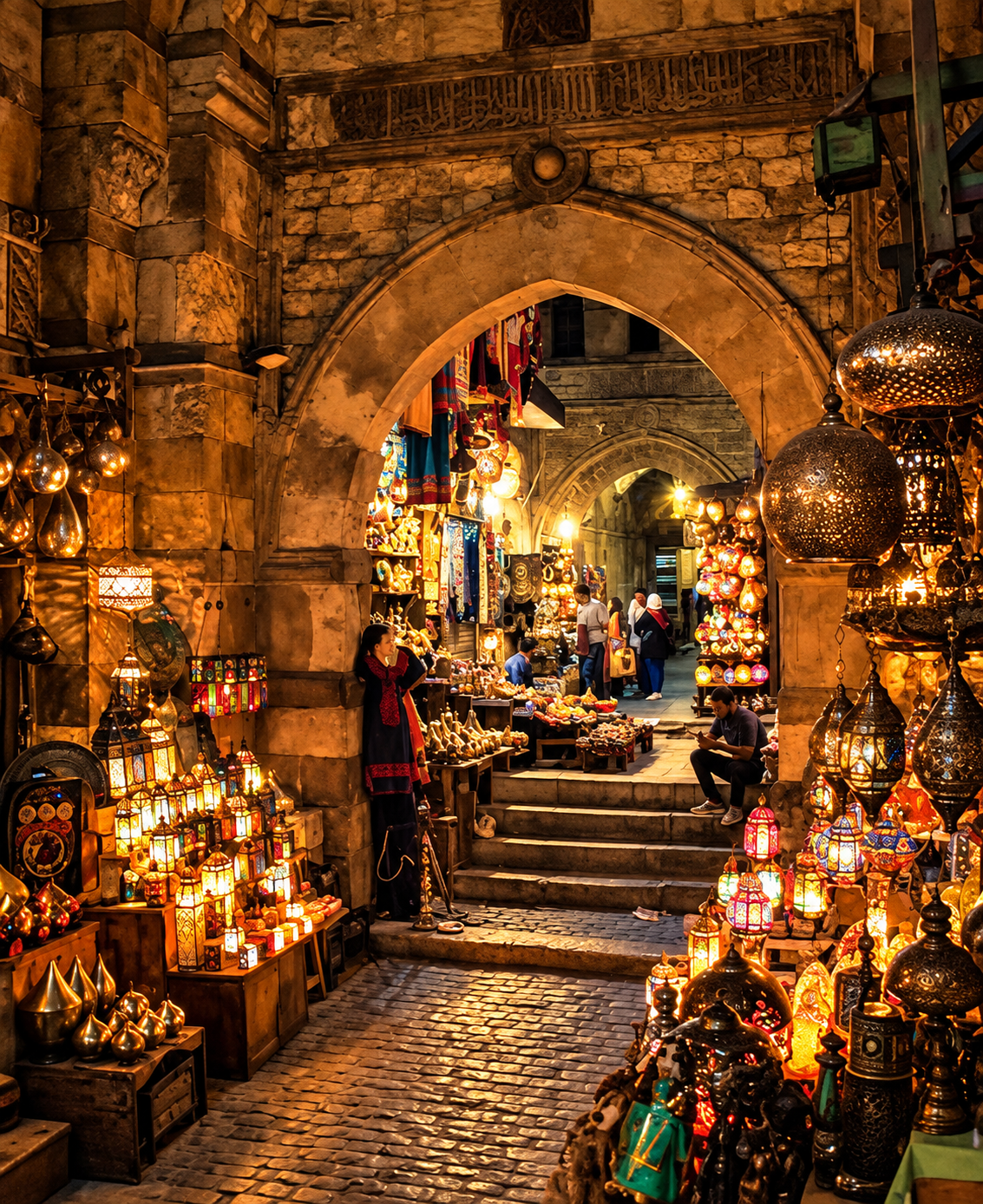
Al-Muizz Street: Walk along one of Cairo's most historic streets, surrounded by medieval monuments, mosques, houses, shops, and craftsmen.
Optional Local Experience: Stop for tea, coffee, or a traditional Egyptian snack at a local café.
Return: Transfer back to your hotel in Cairo or Giza.
Includes/Excludes
Includes
- Hotel pickup and drop-off
- Private air-conditioned vehicle
- Professional English-speaking Egyptologist
- Mosque of Ibn Tulun visit
- Gayer-Anderson House visit
- Bab Zuweila visit
- Bayt Al-Suhaymi visit
- Al-Muizz Street walking tour
- Historic Cairo exploration
- Bottled water
- Private sightseeing experience
Excludes
- Lunch
- Drinks and refreshments
- Additional entrance tickets not specified in the package
- Personal expenses
- Optional activities
- Photography fees where applicable
- Tips and gratuities
- Travel insurance
- Any service not specifically mentioned under Includes
Cairo is famous for the Giza Pyramids, the Sphinx, the Egyptian Museum, Khan El Khalili, and the Nile. These iconic attractions deserve their place on every Egypt itinerary, but there is another side of Cairo waiting to be discovered.
Away from the busiest tourist routes are historic streets, quiet courtyards, forgotten architectural details, local markets, traditional workshops, peaceful gardens, unusual museums, and neighborhoods where everyday Cairo continues at its own pace.
For travelers who want to experience something different, exploring Cairo off the beaten path can reveal a more personal side of the Egyptian capital.
These hidden gems are not necessarily secret places. Some are well known among locals and historians but receive fewer international visitors than Cairo’s major landmarks.
The reward is a chance to see the city beyond its famous monuments.
What Does “Off the Beaten Path” Mean in Cairo?
Cairo is too large and diverse to be experienced through a standard checklist.
An off-the-beaten-path experience means looking beyond the most famous attractions and exploring places that reveal another aspect of the city.
This could mean visiting a historic house, walking through an old neighborhood, discovering a traditional craft workshop, exploring a quiet religious site, eating at a local restaurant, or simply wandering through streets away from the main tourist areas.
The goal is not necessarily to find somewhere completely unknown.
It is to experience Cairo from a different perspective.
Bayt Al-Suhaymi: A Hidden Historic House
One of the most fascinating places to explore in historic Cairo is Bayt Al-Suhaymi, a traditional Ottoman-era house located near Al-Muizz Street.
From the outside, the entrance can appear relatively modest.
Inside, however, the house reveals a sophisticated traditional design built around courtyards and private spaces.
Visitors can see wooden mashrabiya screens, decorated ceilings, stonework, traditional rooms, and architectural details that illustrate how wealthy families lived in historic Cairo.
The house provides a different perspective from monumental mosques and palaces.
Instead of focusing on rulers and major historical events, it tells the story of domestic life.
Al-Muizz Street Beyond the Crowds
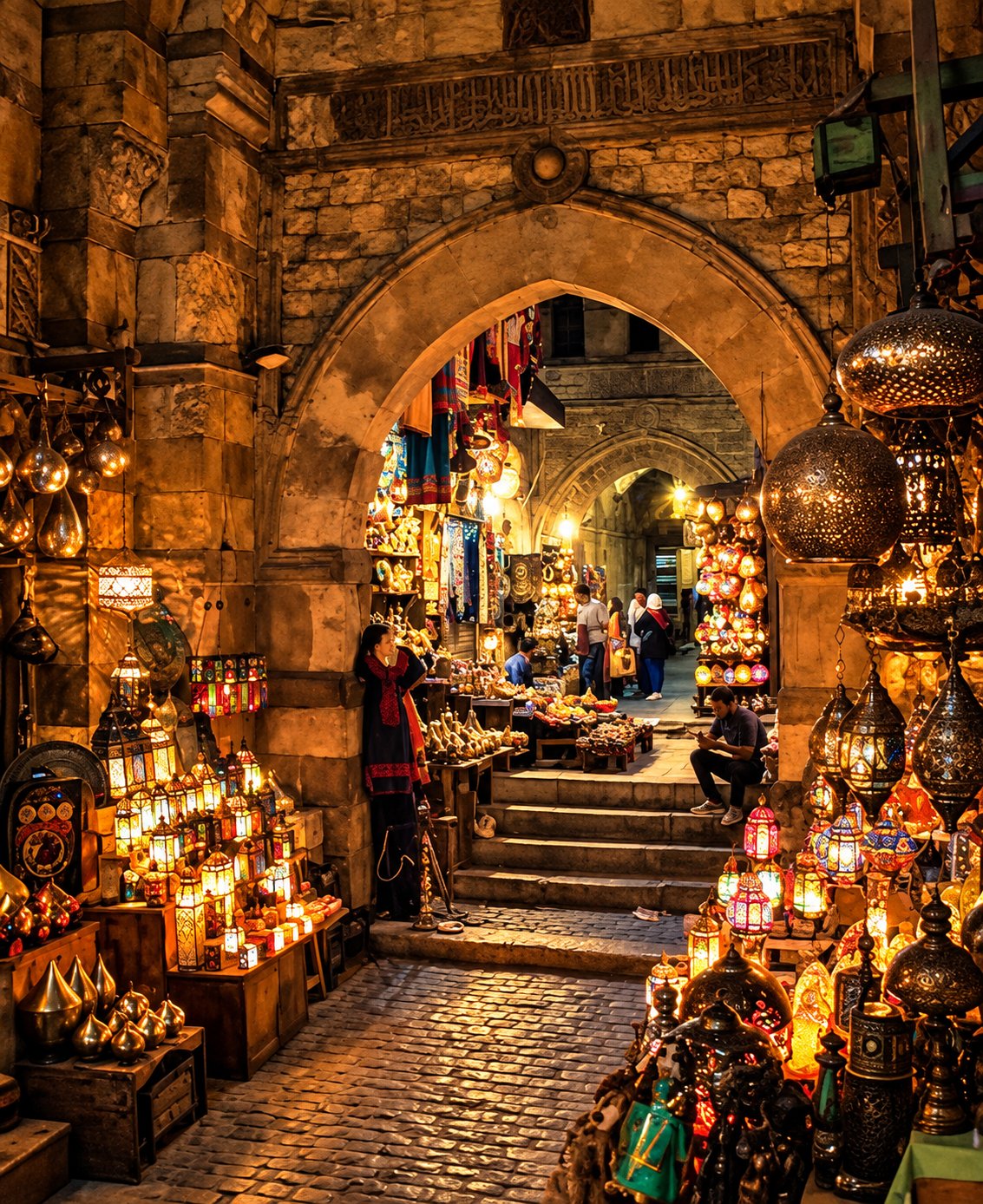
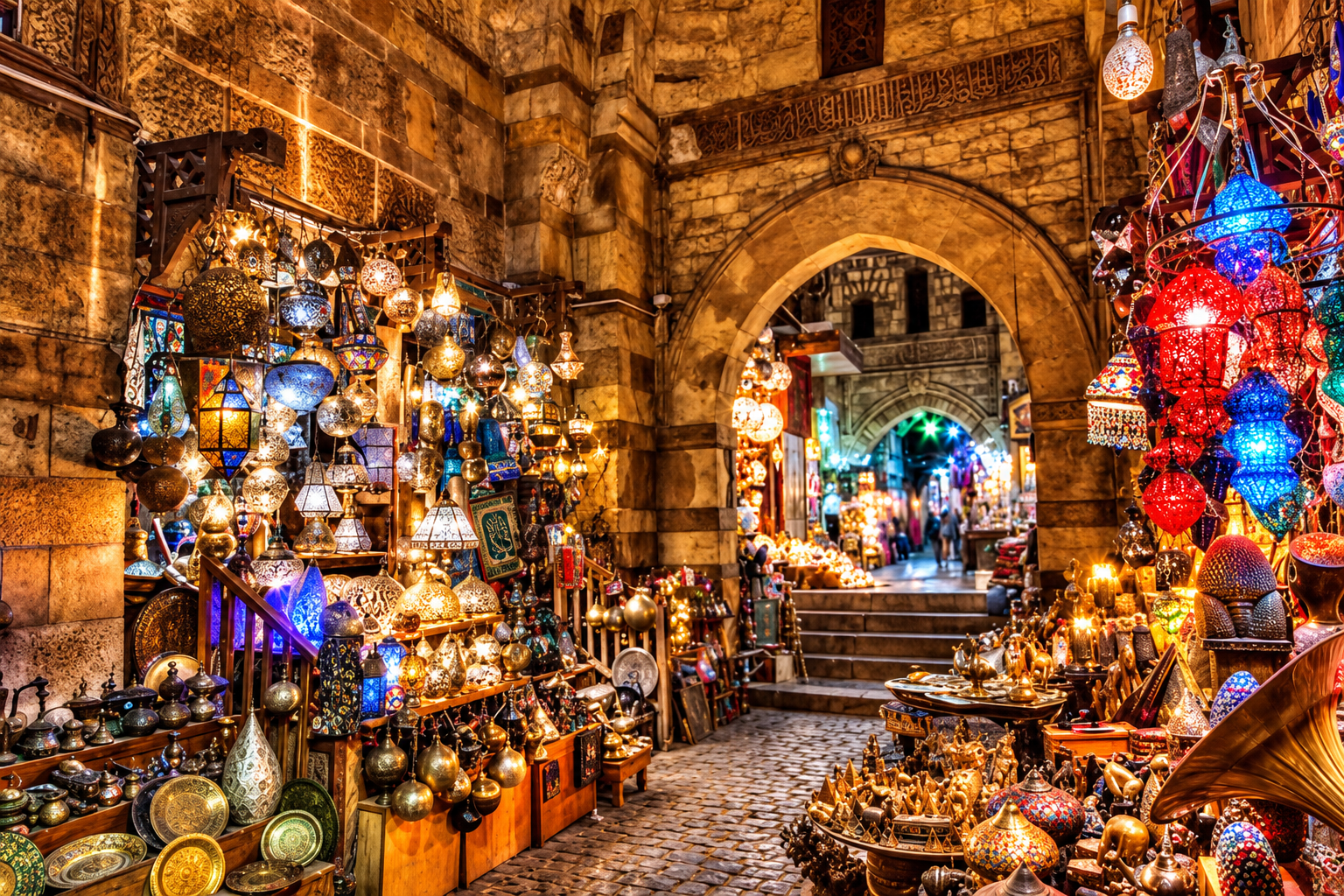
Al-Muizz Street is one of Cairo’s most famous historic streets, but many visitors experience only its busiest sections.
Taking time to explore the surrounding lanes can reveal a much quieter side of the district.
Historic doors, old houses, small workshops, traditional markets, and architectural details can be found throughout the surrounding neighborhood.
Look closely at the buildings and you may notice inscriptions, carved stone, wooden balconies, and decorative features that are easy to miss when walking quickly.
A local guide can help identify buildings and explain their history.
Bab Zuweila and Medieval Cairo
Bab Zuweila is one of the surviving gates of medieval Cairo.
The monumental structure provides an impressive reminder of the city’s historic walls and defensive system.
Its towers rise above the surrounding neighborhood and offer a different perspective on historic Cairo.
The streets around the gate are still active with local commerce.
Walking through the area allows visitors to experience the contrast between medieval architecture and modern Egyptian daily life.
The Street of the Tentmakers
One of Cairo’s most distinctive traditional craft areas is the Street of the Tentmakers, or Sharia Khayamiya.
This historic street is associated with the traditional Egyptian craft of decorative appliqué textiles.
The colorful designs are often inspired by geometric patterns, flowers, historical motifs, and traditional Egyptian art.
Visiting the workshops gives travelers an opportunity to see craftsmen working with textiles and learn about a craft that has been passed down through generations.
It is also a great place to find handmade souvenirs that are different from mass-produced tourist products.
Traditional Workshops in Old Cairo
Cairo’s historic districts contain numerous small workshops.
Depending on the neighborhood, visitors may encounter craftsmen working with wood, metal, leather, textiles, or other materials.
These workshops can be easy to overlook because they are often located inside ordinary streets.
Yet they provide a valuable glimpse into traditional craftsmanship.
For travelers interested in culture, photography, and handmade products, exploring these workshops can be one of the most rewarding off-the-beaten-path experiences in Cairo.
Always ask permission before photographing craftsmen at work.
Coptic Cairo Beyond the Main Attractions
Coptic Cairo is already an important tourist destination, but there is more to discover beyond its most famous churches.
The area contains narrow passages, historic buildings, religious architecture, and traces of different periods of Egyptian history.
The Roman fortress of Babylon provides an important historical background for the district.
Exploring slowly allows visitors to notice architectural details and understand how Christian heritage became part of Cairo’s broader history.
The atmosphere can be particularly peaceful compared with some of the busier parts of the city.
The Monastery of Saint Simon
The Cave Church, also known as the Monastery of Saint Simon the Tanner, is located in the Mokattam area of Cairo.
The church is carved into the rock of the Mokattam mountain and is associated with Cairo’s Zabbaleen community.
The site is visually striking because of its large amphitheater-like setting and rock-cut architecture.
The surrounding area also provides insight into a community whose history is closely connected with waste collection and recycling in Cairo.
For visitors interested in religious architecture and lesser-known parts of the city, this can be a memorable experience.
Manial Palace
Located on Rhoda Island, Manial Palace offers a very different architectural experience.
The palace complex combines several architectural influences and contains gardens, courtyards, decorative interiors, and collections associated with its former royal residents.
Compared with the pyramids or major Islamic monuments, the palace often provides a quieter sightseeing experience.
Its combination of architecture, gardens, art, and history makes it particularly interesting for visitors looking for something different.
Al-Azhar Park
Although Al-Azhar Park has become increasingly popular, it remains an excellent place to escape the intensity of central Cairo.
The park was created on a former historic landfill site and transformed into a landscaped public space.
From elevated areas within the park, visitors can enjoy views across historic Cairo.
The contrast is remarkable.
Medieval minarets and domes rise beyond modern neighborhoods, creating one of the most interesting panoramas in the city.
The park is also a pleasant place to take a break during a day of sightseeing.
Local Markets Away from Khan El Khalili
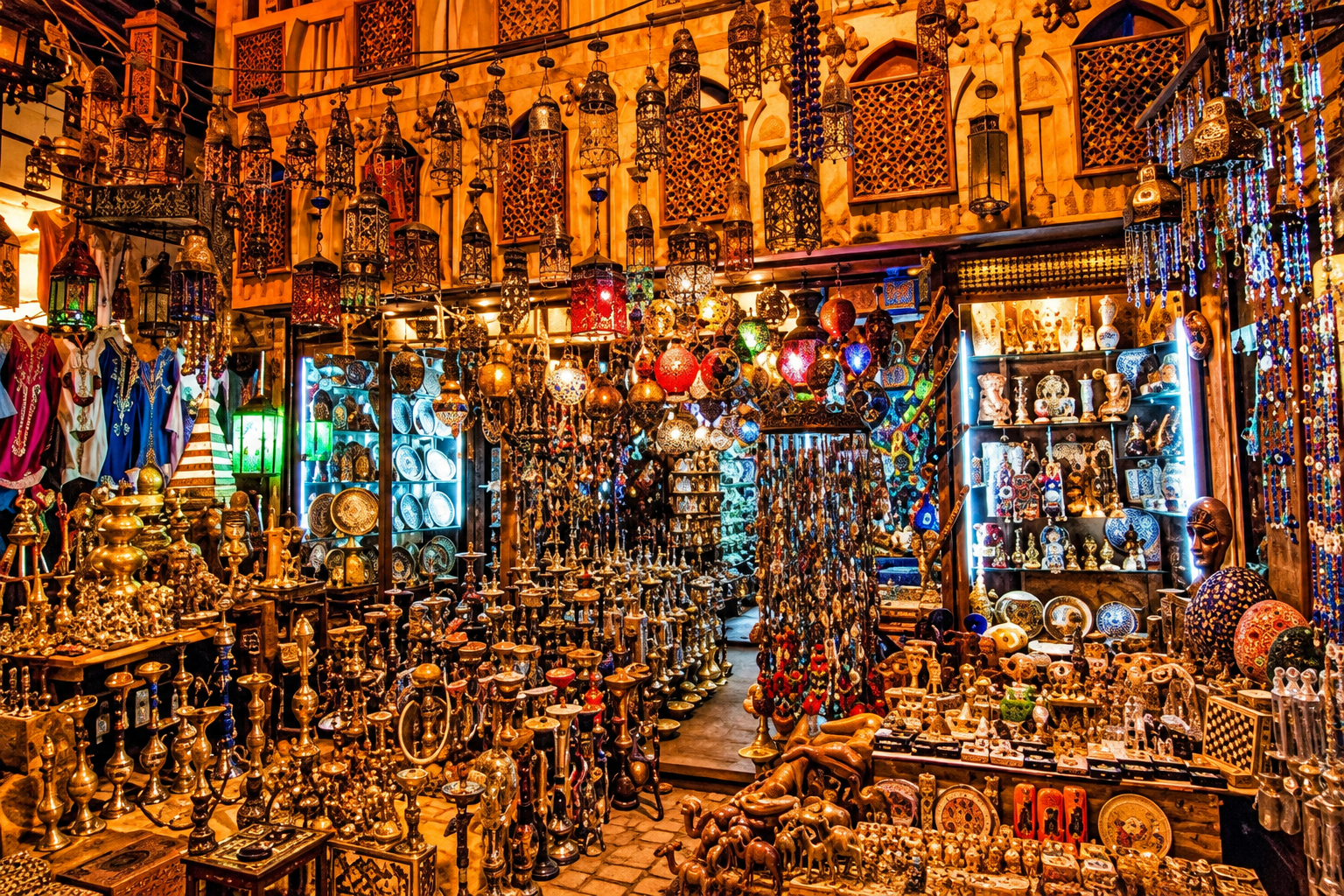
Khan El Khalili is famous, but Cairo has countless smaller neighborhood markets.
These local markets provide a much more everyday shopping experience.
Depending on the area, you may find fresh fruit and vegetables, spices, bread, clothing, household products, traditional crafts, and street food.
The atmosphere can be lively and energetic.
For travelers interested in local life, these markets can be more revealing than a conventional souvenir shop.
A guide can help visitors understand how the markets work and communicate with vendors when necessary.
Cairo’s Traditional Food Scene
Exploring hidden Cairo also means exploring its food.
Some of the city’s best culinary experiences can be found in simple local restaurants rather than formal tourist establishments.
Try traditional dishes such as:
- Koshari
- Ful medames
- Ta’ameya
- Hawawshi
- Kofta
- Egyptian bread
- Basbousa
- Kunafa
- Fresh sugarcane juice
Food is an important part of understanding Cairo’s culture.
A local food experience can be combined with a neighborhood walk, market visit, or historic sightseeing.
Historic Cafés and Local Life
Cairo’s cafés are more than places to drink tea.
They are social spaces where people meet, talk, play games, watch football, and spend time with friends.
Some cafés are historic and associated with writers and artists.
Others are simple neighborhood establishments serving tea and coffee to local residents.
Sitting at a café for thirty minutes can provide an entirely different understanding of Cairo.
Instead of observing the city from a tour bus, you become part of its everyday rhythm.
Cairo’s Hidden Architectural Details
You do not always need a specific attraction to find a hidden gem.
Look at the buildings around you.
Historic Cairo contains countless details that are easy to miss:
- Carved wooden doors
- Mashrabiya windows
- Stone inscriptions
- Decorative arches
- Historic fountains
- Old balconies
- Geometric patterns
- Traditional courtyards
- Handcrafted metalwork
Taking your time is the key.
Cairo rewards travelers who slow down.
The Nile Beyond the Tourist Cruise
The Nile is one of Cairo’s most famous features, but visitors can experience it in quieter ways.
A traditional felucca ride can offer a more relaxed perspective.
Rather than focusing only on sightseeing, you can watch Cairo’s skyline from the water, observe boats moving along the river, and enjoy the changing light around sunset.
The river provides a peaceful contrast to the city’s busy streets.
Exploring Cairo by Bicycle
Cycling can also be a great way to discover less-touristy parts of Cairo.
A bicycle allows you to move between neighborhoods while remaining close to street life.
You can stop at markets, photograph architecture, visit local cafés, or explore small streets.
A guided cycling experience can be adapted according to traffic, weather, cycling ability, and areas of interest.
For travelers who want to experience Cairo rather than simply visit its monuments, cycling can provide a completely different perspective.
Hidden Gems for Photography
Cairo offers endless opportunities for photographers.
Historic architecture, local markets, colorful doors, traditional crafts, street food, cafés, and the Nile all provide interesting subjects.
Early mornings can offer softer light and quieter streets.
Late afternoon can provide warm light over historic buildings and the city skyline.
Always respect local customs when photographing people, particularly in residential neighborhoods and markets.
Why Explore Cairo Off the Beaten Path?
The famous monuments tell an essential part of Egypt’s story.
But Cairo’s hidden corners reveal something else.
They show how people live, work, eat, worship, create, trade, and socialize.
They reveal the city’s continuing traditions.
They also demonstrate that Cairo is not a museum frozen in the past.
It is a living city where ancient architecture and modern life exist side by side.
Create Your Own Hidden Cairo Experience
There is no single route for discovering Cairo’s hidden gems.
Your experience can be built around your interests.
History lovers may prefer historic houses, medieval gates, mosques, and churches.
Photography enthusiasts may want quiet streets, traditional architecture, and local markets.
Food lovers can focus on neighborhood restaurants, bakeries, street food, and cafés.
Travelers interested in local culture may prefer traditional workshops, markets, and residential neighborhoods.
The flexibility of a private experience makes it possible to create an itinerary that feels personal rather than standard.
Discover Cairo Beyond the Guidebook
Cairo has famous attractions that every traveler should experience.
But once you move beyond the standard itinerary, another city begins to appear.
A traditional workshop.
A quiet courtyard.
A hidden architectural detail.
A neighborhood café.
A local market.
A historic house.
A small street filled with everyday life.
These experiences may not always appear on the front page of a guidebook, but they can become some of the most memorable moments of an Egypt trip.
Explore Hidden Cairo with Let’s Explore Egypt
With Let’s Explore Egypt, you can discover Cairo beyond the usual tourist route through private, flexible experiences designed around your interests.
Explore historic neighborhoods, traditional markets, hidden architectural treasures, local food spots, craft workshops, Coptic Cairo, Islamic Cairo, the Nile, and lesser-known cultural attractions.
Whether you have a few hours or a full day, your experience can be adapted to your schedule.
Cairo is famous for its monuments—but its hidden corners reveal its soul.
Come beyond the pyramids.
Walk the old streets.
Meet local Cairo.
Discover the hidden gems that make Egypt’s capital unforgettable.
Frequently Asked Questions
FAQs
The tour takes approximately 7–8 hours.
Yes, it is a private tour with private transportation and a dedicated Egyptologist.
The itinerary focuses on lesser-known historic sites, traditional neighborhoods, old houses, medieval streets, and local atmosphere rather than only the major tourist attractions.
The tour includes Ibn Tulun Mosque, Gayer-Anderson House, Bab Zuweila, Bayt Al-Suhaymi, and Al-Muizz Street.
Yes, a professional English-speaking Egyptologist accompanies the tour.
Yes. Parts of Historic Cairo are explored on foot so guests can experience the narrow medieval streets and architectural details.
Yes, Khan El Khalili can be added if sufficient time is available.
Yes, Coptic Cairo can be added as an extension to create a broader Historic Cairo experience.
Yes. The private format allows the pace and walking time to be adjusted for families.
Comfortable walking shoes and modest clothing are recommended, especially when visiting religious sites.