




Overview
Step beyond the usual Cairo sightseeing routes and discover the stories, legends, architecture, and traditions of Old Cairo. This private cultural tour takes you through the Citadel of Saladin, historic mosques, Al-Muizz Street, Bab Al-Futuh, and Khan El Khalili Bazaar, with a professional Egyptologist bringing the history and stories of the city to life.
Highlights
- Citadel of Saladin
- Mosque of Muhammad Ali
- Sultan Hassan Mosque
- Al-Rifa'i Mosque
- Historic Al-Muizz Street
- Bab Al-Futuh
- Historic medieval architecture
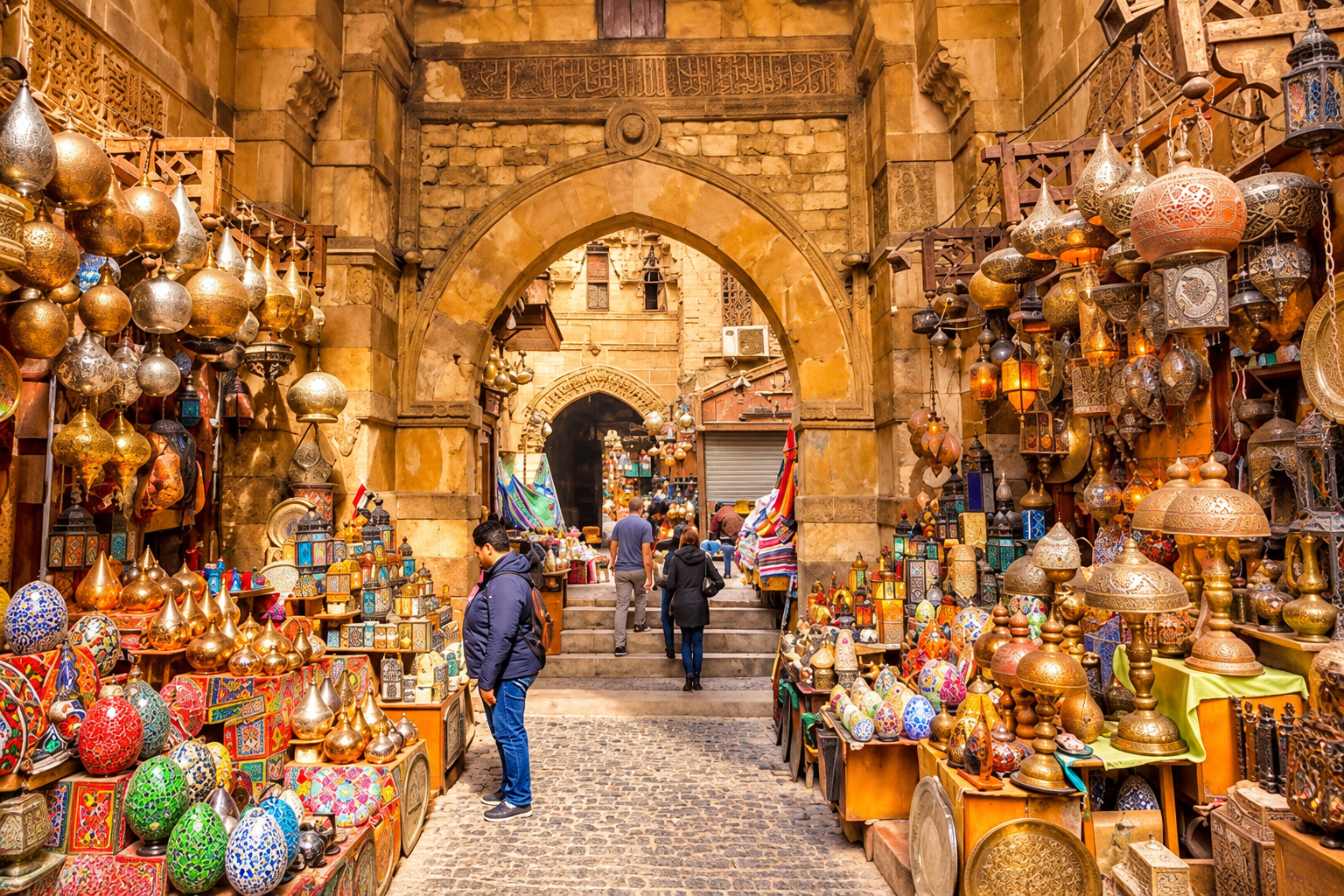
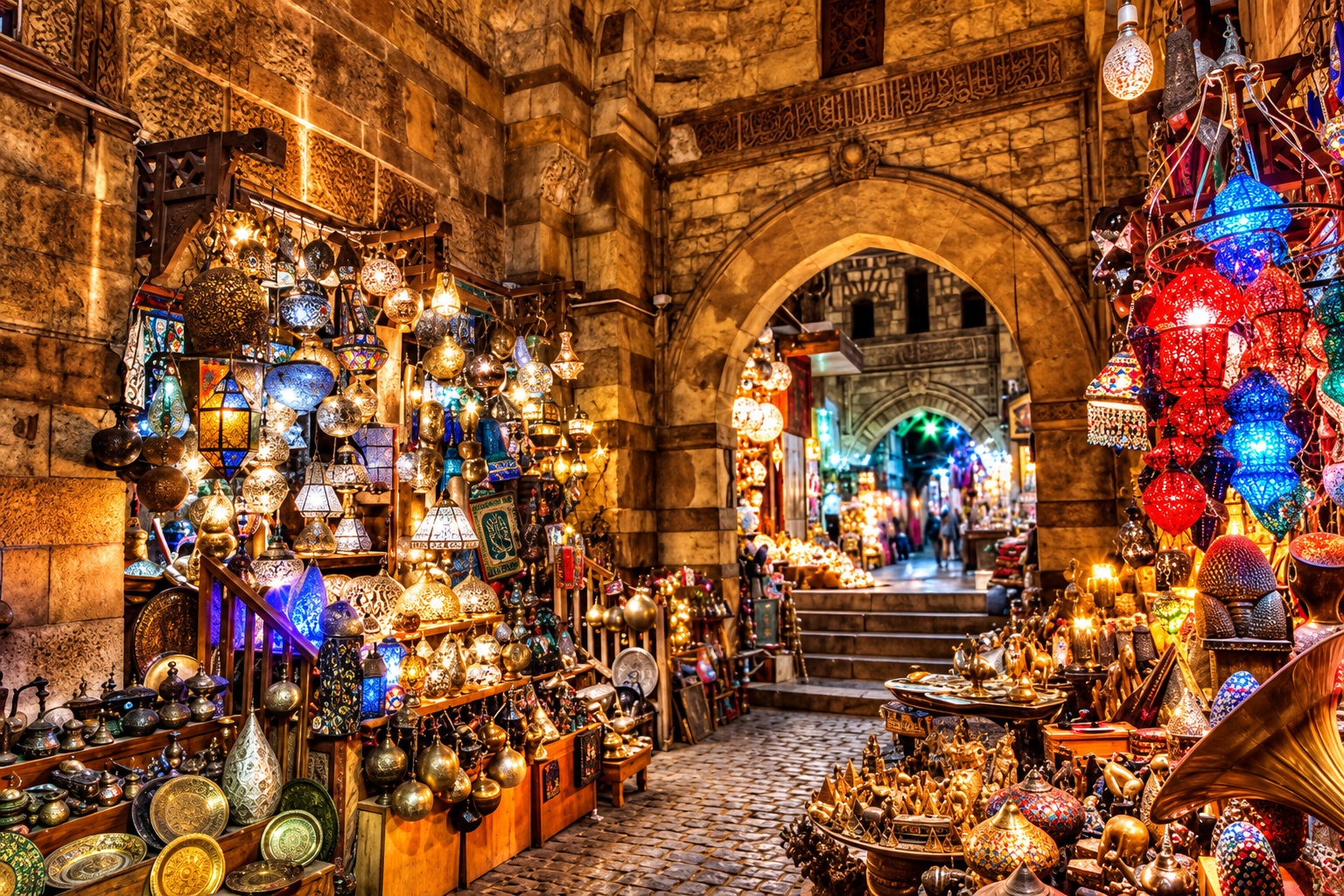
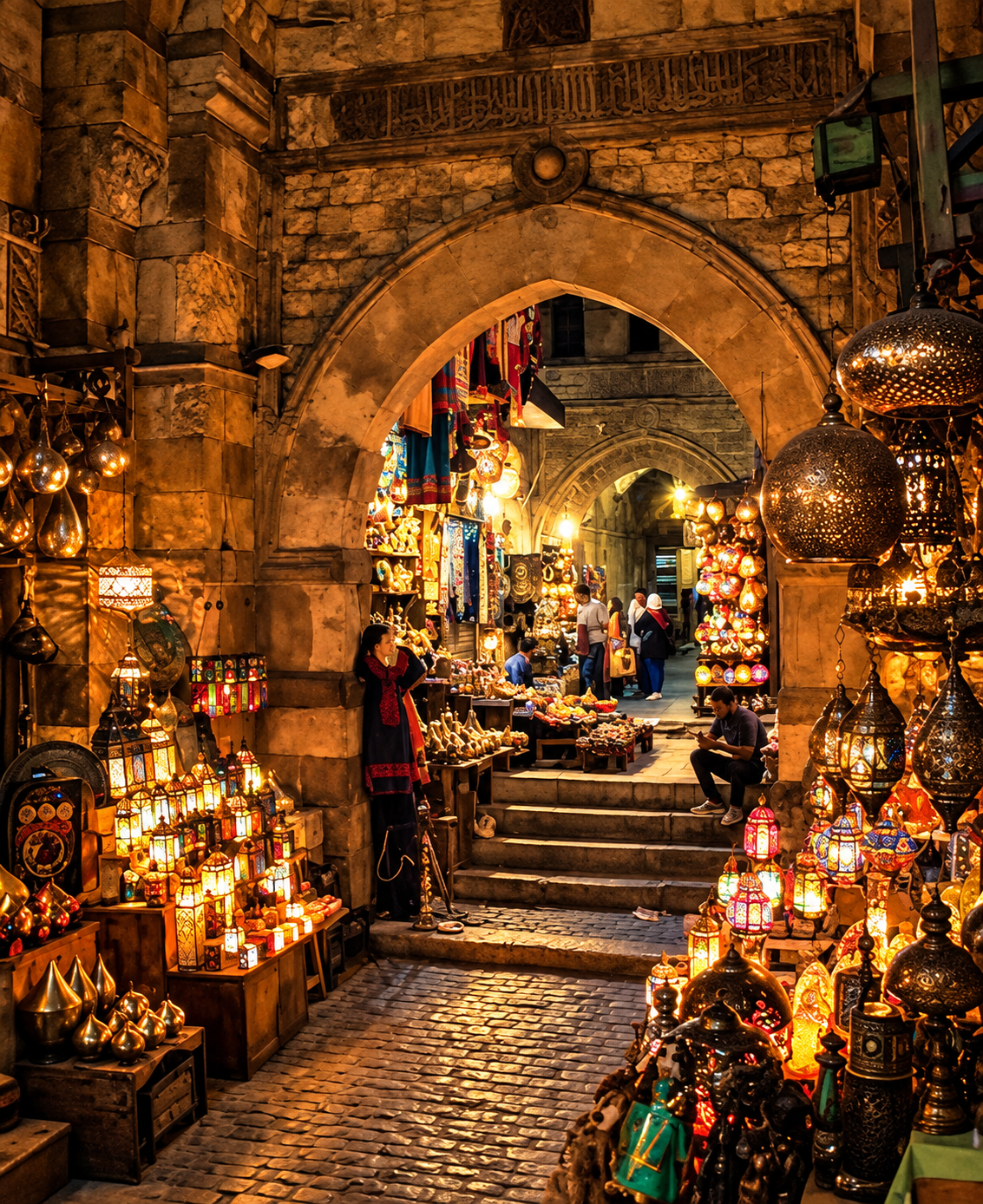
- Khan El Khalili Bazaar
- Traditional crafts and souvenirs
- Local streets and hidden corners
- Stories and legends of Old Cairo
- Private cultural experience
- Professional Egyptologist guide
- Optional Nile Felucca ride
Itinerary Description
Explore the heart of Old Cairo on a private journey through centuries of history. Visit the Citadel and its magnificent mosque, discover the medieval mosques of Sultan Hassan and Al-Rifa'i, walk along historic Al-Muizz Street, pass through the ancient gates of Cairo, and finish at the lively Khan El Khalili Bazaar. Along the way, hear fascinating stories and local legends that reveal another side of the city beyond its famous monuments.
Morning – Cairo/Giza: Hotel pickup and begin your private Old Cairo experience.
Citadel of Saladin: Explore the historic Citadel and visit the impressive Mosque of Muhammad Ali.
Sultan Hassan & Al-Rifa'i: Discover two of Cairo's most remarkable historic mosques and learn about their architecture and history.
Al-Muizz Street: Walk through one of Old Cairo's most atmospheric historic streets, surrounded by medieval buildings, mosques, and traditional houses.
Bab Al-Futuh: Visit one of the historic gates of medieval Cairo and hear stories about the city's old defensive walls and neighborhoods.
Khan El Khalili: Explore the famous traditional bazaar, browse local crafts, lanterns, spices, jewelry, and souvenirs, and enjoy the atmosphere of Old Cairo.
Optional Nile Experience: Add a traditional Felucca ride on the Nile at the end of the tour, subject to time and availability.
Return: Transfer back to your hotel in Cairo or Giza.
Includes/Excludes
Includes
- Hotel pickup and drop-off
- Private air-conditioned vehicle
- Professional English-speaking Egyptologist
- Private sightseeing experience
- Citadel of Saladin visit
- Mosque of Muhammad Ali visit
- Sultan Hassan visit
- Al-Rifa'i Mosque visit
- Al-Muizz Street experience
- Bab Al-Futuh visit
- Khan El Khalili Bazaar visit
- Bottled water
- All transfers mentioned in the itinerary
Excludes
- Entrance tickets unless specifically included in the selected package
- Lunch
- Drinks
- Nile Felucca ride unless selected
- Personal expenses
- Shopping purchases
- Optional activities
- Tips and gratuities
- Travel insurance
- Any service not specifically mentioned under Includes
More Info
Cairo is a city where history is not confined to museums. It lives in narrow alleyways, ancient mosques, old houses, bustling markets, hidden courtyards, and traditional cafés.
For centuries, the streets of Cairo have carried stories from one generation to another. Some are based on historical events, while others have become legends shaped by local traditions, imagination, and centuries of storytelling.
Walking through the Old City of Cairo is therefore more than a sightseeing experience. It is an opportunity to discover the stories behind the architecture and understand how history, culture, religion, and everyday life became woven together.
From the medieval streets of Islamic Cairo to the market lanes of Khan El Khalili, every corner seems to have a story waiting to be told.
The Living History of Old Cairo
Cairo has existed in several forms throughout its long history.
The modern city grew around earlier settlements, including the ancient Egyptian city of Memphis and the Roman fortress of Babylon. Later, Islamic rulers established new centers of power that eventually developed into the Cairo we know today.
The historic districts of Cairo contain evidence of different periods, including Pharaonic, Roman, Coptic, Islamic, Ottoman, and modern Egyptian history.
This mixture is one of the reasons Cairo feels different from many other cities.
You can walk through a medieval street, pass a centuries-old mosque, stop at a traditional café, and then find yourself surrounded by the sounds of modern Cairo.
The Legend of Cairo’s Name
One of the fascinating stories associated with Cairo concerns the city’s name.
The Arabic name Al-Qahirah is commonly translated as “The Victorious.”
The name is traditionally connected with the foundation of the Fatimid city in the 10th century.
According to historical tradition, the Fatimids established their new capital north of the existing settlements around Fustat and named it Al-Qahirah.
Over time, the name became associated with the entire city.
Like many stories surrounding Cairo, historical facts and later interpretations have become intertwined, giving the city an identity that extends far beyond its physical monuments.
The Fortress of Babylon and the Story of Coptic Cairo
Before Islamic Cairo became a major center of civilization, the area around present-day Old Cairo already had a long history.
The Roman fortress of Babylon became an important settlement in the region.
Nearby developed what is now known as Coptic Cairo, an area associated with some of Egypt’s oldest Christian communities and churches.
Walking through this part of Cairo reveals a very different atmosphere from the crowded markets of Islamic Cairo.
Ancient churches, narrow streets, and historic buildings preserve stories from centuries of Egyptian Christian history.
Among the most famous landmarks is the Hanging Church, traditionally associated with the Coptic Orthodox tradition.
The church is known for its distinctive position above the remains of the Roman fortress and has become one of the most recognizable monuments in Coptic Cairo.
The Hanging Church and Its Stories
The Hanging Church is surrounded by traditions and stories that have been passed down through generations.
Its name comes from its position above the old Roman fortress structures.
Inside, visitors can see traditional Coptic architectural features, religious artwork, wooden screens, and icons.
Like many ancient religious buildings, the church has accumulated stories over the centuries.
Some traditions connect the area with important episodes in Christian history, while others developed through local religious storytelling.
When visiting historic Cairo, it is important to distinguish between documented history and later traditions. Both are fascinating, but they represent different types of cultural heritage.
Al-Muizz Street: A Journey Through Medieval Cairo
Few places capture the atmosphere of historic Cairo better than Al-Muizz Street.
The street is named after the Fatimid caliph Al-Mu’izz li-Din Allah, whose rule was connected with the establishment of Cairo as a major Fatimid capital.
Today, Al-Muizz Street is lined with historic mosques, schools, mausoleums, houses, gates, and other architectural treasures.
Walking along the street feels like entering another era.
Stone buildings rise above narrow lanes, decorated doorways reveal centuries-old craftsmanship, and historic monuments stand beside shops and cafés.
The street itself has witnessed political changes, religious life, commercial activity, and countless generations of Cairo residents.
The Mystery and Atmosphere of Khan El Khalili
No exploration of Cairo legends would be complete without Khan El Khalili.
The famous bazaar is one of Cairo’s most recognizable historic market districts.
Its narrow streets are filled with shops selling jewelry, lanterns, spices, textiles, souvenirs, perfumes, and traditional crafts.
But beyond shopping, the bazaar has an atmosphere that has inspired generations of visitors and storytellers.
The winding streets can feel almost labyrinthine, particularly when explored away from the busiest routes.
Traditional cafés provide places to sit and observe the activity.
One of the most famous cafés in the area is associated with Egyptian writer Naguib Mahfouz, whose novels captured many aspects of Cairo’s neighborhoods and characters.
His connection with the historic city helped make the streets of Cairo part of modern Egyptian literary culture.
Cairo in the Stories of Naguib Mahfouz
Cairo’s legends are not limited to ancient history.
The city has also inspired some of Egypt’s greatest modern writers.
Naguib Mahfouz, the first Arab writer to receive the Nobel Prize in Literature, frequently used Cairo’s streets, neighborhoods, houses, and social life as settings for his stories.
His works transformed ordinary Cairo locations into literary landscapes.
Walking through historic Cairo after reading some of Mahfouz’s works can provide a different perspective.
A simple alley may suddenly feel like more than an alley. A traditional café may seem connected to generations of conversations and characters.
This is one of the unique qualities of Cairo: the city’s history continues to inspire storytelling.
The Legend of the City Gates
Medieval Cairo was protected by impressive gates and defensive walls.
Several historic gates remain today, including Bab Zuweila, one of the best-known surviving gates of medieval Cairo.
Bab Zuweila was part of the city’s historic fortifications and served as an important entrance to the Fatimid city.
Its towers provide impressive views over the surrounding historic district.
The gate has also become associated with stories, legends, and dramatic events from Cairo’s medieval history.
Standing beneath its massive stone structure offers a reminder of how different the city looked centuries ago.
Bab Zuweila and Medieval Cairo
Bab Zuweila is more than an architectural monument.
It represents a period when Cairo was surrounded by defensive walls and controlled entrances.
The area around the gate became an important part of the city’s commercial and social life.
Today, the streets surrounding Bab Zuweila remain full of local activity.
This combination of historic architecture and everyday life makes the area especially interesting for travelers who want to explore Cairo beyond the main tourist attractions.
The Citadel and Stories of Power
High above historic Cairo stands the Citadel of Saladin, one of the city’s most important medieval landmarks.
The fortress was established by Salah al-Din, known in the West as Saladin, during the 12th century.
Its elevated position allowed rulers to defend and oversee the city.
Over the centuries, the Citadel became a major center of political and military power.
Today, visitors can explore its walls, courtyards, mosques, and museums while enjoying views across Cairo.
The Citadel is also connected to numerous historical stories involving rulers, military campaigns, political changes, and architectural development.
The City of a Thousand Minarets
Cairo is sometimes described as the “City of a Thousand Minarets.”
The expression reflects the extraordinary number of mosques and minarets that have appeared across the city throughout its history.
Walking through Old Cairo, visitors can see different architectural styles representing different periods.
Some minarets are simple and elegant, while others are highly decorated and monumental.
Together, they create one of Cairo’s most recognizable skylines.
At certain times of day, the sound of the call to prayer moving across the city adds another layer to the experience.
Legends Hidden in Old Houses
Some of Cairo’s most fascinating stories are connected to private houses rather than famous monuments.
Historic Cairo contains traditional houses featuring courtyards, wooden screens, decorated ceilings, fountains, and carefully designed rooms.
These homes were built around ideas of privacy, climate control, family life, and social traditions.
Many are now historic monuments.
Walking through them can reveal details about how wealthy Cairo families lived centuries ago.
The architecture itself tells stories about daily life that are often overlooked when visitors focus only on famous monuments.
Why Cairo’s Legends Still Matter
The legends of Cairo are important because they show that history is not simply a collection of dates.
Historical places become meaningful because people attach memories, stories, traditions, and experiences to them.
Some stories are supported by historical evidence.
Others are religious traditions, local folklore, or stories passed down through generations.
The distinction matters, but folklore should not simply be dismissed. It can reveal how communities understood their city and how stories helped preserve cultural identity.
Exploring Cairo Through Its Stories
A traditional sightseeing tour may show you the major monuments of Cairo.
A story-based experience can show you something different.
Instead of simply asking when a building was constructed, you can ask:
Who lived here?
Why was this street important?
What happened here?
How did people use this market?
Which stories have been passed down?
How has the neighborhood changed?
These questions turn a walk through Cairo into a journey through the city’s memory.
The Best Way to Experience Old Cairo
Old Cairo is best explored slowly.
Allow time to walk through historic streets, stop for photographs, enter traditional markets, visit important monuments, and enjoy a cup of Egyptian tea.
A knowledgeable local guide can add another dimension by explaining the historical background behind the buildings while also identifying traditional stories and legends.
The experience becomes particularly memorable when combined with visits to Al-Muizz Street, Khan El Khalili, Bab Zuweila, the Citadel, and the historic religious districts.
Discover the Stories Behind Cairo
Cairo is more than pyramids and museums.
It is a city of stories.
Its ancient streets have witnessed rulers and merchants, scholars and craftsmen, travelers and local families. Its markets have survived changing generations, while its mosques, churches, houses, and monuments preserve memories of the city’s past.
Cairo Legends: Stories of the Old City offers travelers a chance to experience this living history.
Walk through medieval streets.
Discover hidden architectural details.
Listen to local stories.
Explore historic markets.
Taste traditional Egyptian food.
And see Cairo not only as a destination, but as a city whose past continues to live in its streets.
Explore Old Cairo with Let’s Explore Egypt
If you want to discover the historic heart of Cairo beyond the standard tourist route, Let’s Explore Egypt can arrange a private cultural experience through Old Cairo, Islamic Cairo, Al-Muizz Street, Khan El Khalili, and the city’s historic neighborhoods.
Whether you are interested in history, architecture, photography, local culture, food, or hidden stories, your itinerary can be tailored around your interests.
Come to Cairo for the monuments. Stay for the stories.
Frequently Asked Questions
FAQs
The tour takes approximately 7–8 hours.
Yes, it is arranged as a private cultural experience with private transportation and a dedicated guide.
The tour includes the Citadel of Saladin, Mosque of Muhammad Ali, Sultan Hassan, Al-Rifa'i, Al-Muizz Street, Bab Al-Futuh, and Khan El Khalili.
Yes, a professional English-speaking Egyptologist accompanies the tour.
Yes, pickup and drop-off are available from hotels in Cairo and Giza.
Yes, transportation is provided by a private air-conditioned vehicle.
Yes, when the sites are open to visitors and according to local regulations. Modest clothing is recommended.
Yes. You will have time to explore the bazaar and browse traditional crafts, lanterns, spices, jewelry, and souvenirs.
Photography is generally permitted, subject to the rules of each site and religious monument.
Yes. The private format allows the pace to be adjusted for families and children.
Comfortable clothing and walking shoes are recommended. Modest clothing is appropriate when visiting mosques.