



Overview
Discover the architectural heart of Cairo on a private cultural tour through the city’s historic neighborhoods. Explore Islamic Cairo, Al-Muizz Street, Bab Zuweila, Bayt Al-Suhaymi, Al-Azhar, Sultan Hassan Mosque, and Al-Rifa’i Mosque, while uncovering lesser-known details about Cairo’s medieval streets, traditional houses, mosques, gates, and markets.
This experience is designed for travelers interested in architecture, history, photography, and local culture, offering a deeper look at Cairo beyond the most famous tourist attractions.
Highlights
- Historic Islamic Cairo
- Al-Muizz Street
- Bab Zuweila
- Bayt Al-Suhaymi
- Al-Azhar Mosque
- Sultan Hassan Mosque
- Al-Rifa'i Mosque
- Medieval city gates
- Traditional Ottoman-era architecture
- Historic streets and courtyards
- Hidden architectural details
- Local markets and craftsmen
- Professional Egyptologist
- Private air-conditioned transportation
- Photography opportunities
Itinerary Description
Explore the architectural heritage of Historic Cairo on a private walking and sightseeing tour. Visit Al-Muizz Street, Bab Zuweila, Bayt Al-Suhaymi, Al-Azhar, Sultan Hassan, and Al-Rifa'i, discovering medieval mosques, traditional houses, decorative facades, courtyards, old city gates, and hidden architectural details before returning to your hotel.
Morning – Cairo: Pickup from your hotel and begin the journey to Historic Cairo.
Bab Zuweila: Explore one of Cairo's historic medieval gates and learn about the defensive architecture of the old city.
Al-Muizz Street: Walk through one of Cairo's most atmospheric historic streets, surrounded by medieval mosques, schools, mausoleums, and traditional buildings.
Bayt Al-Suhaymi: Visit this historic traditional house and discover its courtyards, wooden mashrabiyas, reception rooms, and domestic architecture.
Al-Azhar Area: Explore the surroundings of Al-Azhar and the historic streets of the old city.
Sultan Hassan Mosque: Admire the monumental Mamluk architecture, enormous courtyard, vaulted spaces, and detailed stonework.
Al-Rifa'i Mosque: Visit the richly decorated mosque opposite Sultan Hassan and learn about its later architectural style and historical importance.
Local Market Walk: Enjoy time exploring traditional streets, craftsmen, shops, and architectural details away from the main tourist routes.
Return: Transfer back to your hotel in Cairo or Giza.
Includes/Excludes
Includes
- Hotel pickup and drop-off
- Private air-conditioned vehicle
- Professional English-speaking Egyptologist
- Guided walking tour in Historic Cairo
- Visit to Al-Muizz Street
- Bab Zuweila area
- Bayt Al-Suhaymi visit according to opening arrangements
- Sultan Hassan Mosque
- Al-Rifa'i Mosque
- Al-Azhar area
- Bottled water
- Private sightseeing experience
Excludes
- Entrance tickets unless specifically included in the selected package
- Lunch
- Drinks
- Personal expenses
- Optional activities
- Photography fees where applicable
- Tips and gratuities
- Travel insurance
- Any service not specifically mentioned under Includes
More Info
Cairo is often introduced to travelers through its greatest icons: the Giza Pyramids, the Sphinx, ancient temples, and Egypt’s extraordinary museums. But beyond these famous landmarks lies another side of the Egyptian capital—one shaped by centuries of architecture, craftsmanship, religion, trade, and everyday life.
From medieval mosques and Ottoman houses to hidden courtyards, ancient city gates, traditional markets, and beautifully decorated doors, Cairo architecture tells the story of a city that has continuously evolved for more than a thousand years.
For travelers willing to explore beyond the standard sightseeing route, Cairo offers countless architectural treasures hidden in its historic streets.
A walk through Old Cairo and Islamic Cairo can feel like opening a history book, with every building revealing another chapter of Egypt’s past.
A City Built by Many Civilizations
Cairo’s architecture reflects the many civilizations and cultures that have shaped Egypt.
The city contains traces of Roman, Coptic, Fatimid, Ayyubid, Mamluk, Ottoman, and modern Egyptian architecture.
Each period introduced different building techniques, decorative styles, religious structures, and urban traditions.
This mixture is one of the reasons Cairo is so visually distinctive.
A visitor can walk along one street and encounter a medieval mosque, a traditional house, a historic market, and a modern building within a few minutes.
The result is a city where different centuries exist side by side.
Islamic Cairo: An Architectural Treasure
One of the richest areas for architectural exploration is Islamic Cairo.
Despite its name, the district is not simply a collection of religious monuments. It is a historic urban environment containing mosques, schools, mausoleums, markets, houses, gates, fountains, and commercial buildings.
Many structures date back hundreds of years.
The narrow streets and dense architecture create an atmosphere that is completely different from the broad modern avenues of Cairo.
For architecture enthusiasts, Islamic Cairo provides an opportunity to study details that are easy to overlook during a conventional tour.
Al-Muizz Street
One of the most important historic streets in Cairo is Al-Muizz Street.
Named after the Fatimid ruler Al-Mu’izz li-Din Allah, the street passes through one of the city’s most important historic districts.
It contains numerous examples of medieval Islamic architecture.
Visitors can see monumental entrances, carved stonework, decorated façades, domes, minarets, and traditional urban spaces.
The street is particularly impressive because the buildings are not isolated monuments. They form part of a historic neighborhood where commercial activity and daily life continue around them.
Walking through Al-Muizz allows visitors to appreciate architecture within its original urban context.
The Beauty of Mamluk Architecture
The Mamluk period left a particularly strong architectural legacy in Cairo.
Mamluk buildings are often recognized for their elaborate façades, stone decoration, domes, minarets, geometric patterns, and carefully designed entrances.
Many buildings were created as religious and charitable complexes, combining functions such as mosques, schools, mausoleums, and public facilities.
The architecture reflects the wealth, craftsmanship, and artistic traditions of medieval Cairo.
Look closely at the entrances and you may notice carved inscriptions, geometric patterns, floral details, and carefully arranged stonework.
Historic City Gates
Cairo’s historic walls once protected the medieval city.
Several gates remain, offering visitors a chance to understand how the city was organized and defended.
One of the most famous is Bab Zuweila.
Its monumental towers and historic entrance are among the most recognizable architectural features of medieval Cairo.
Another important gate is Bab al-Futuh, located at the northern edge of the historic Fatimid city.
The gates were not merely defensive structures.
They also controlled movement into and out of the city and became important landmarks in Cairo’s urban development.
Hidden Courtyards and Traditional Houses
Some of Cairo’s most beautiful architectural details are hidden behind simple doors.
Traditional houses were often designed around internal courtyards.
These spaces provided privacy, natural ventilation, shade, and a comfortable environment for residents.
Some historic houses feature wooden mashrabiya screens, decorated ceilings, stone fountains, carved doors, and carefully designed rooms.
The architecture reflects the social and environmental conditions of the time.
Rather than facing outward toward busy streets, many homes were designed to create a private world inside.
This makes historic Cairo’s houses particularly interesting to explore.
Mashrabiya: A Signature of Cairo
One architectural feature closely associated with traditional Cairo is the mashrabiya.
These wooden screens are made from carefully arranged turned-wood pieces.
They provided privacy while allowing air and light to enter.
Mashrabiya became an important element of traditional Islamic architecture, particularly in urban houses.
Today, surviving examples provide an insight into traditional Egyptian craftsmanship.
The patterns can be incredibly intricate, demonstrating the skill required to create them by hand.
The Citadel of Cairo
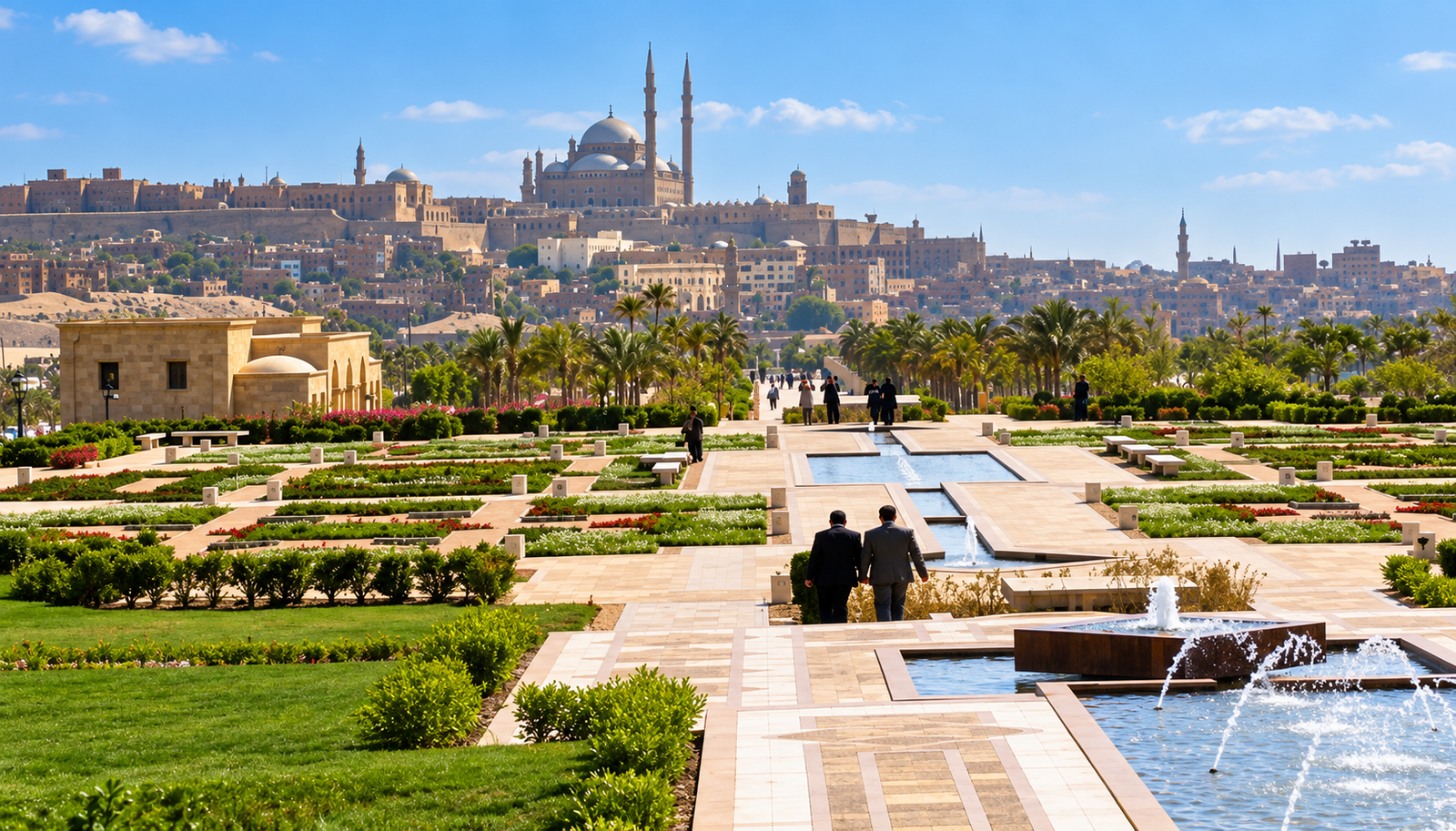
High above the city stands the Citadel of Saladin, one of Cairo’s most important historic landmarks.
Established during the medieval period, the Citadel became an important center of political and military power.
Its elevated position provided strategic advantages and commanding views over Cairo.
The complex contains several important structures, including mosques and museums.
From an architectural perspective, the Citadel demonstrates how military, religious, and political functions could coexist within a single complex.
It also provides one of the best opportunities to see how Cairo expanded around its historic core.
The Mosque of Muhammad Ali
Inside the Citadel stands one of Cairo’s most recognizable landmarks: the Mosque of Muhammad Ali.
Built during the 19th century, the mosque is famous for its large central dome, elegant minarets, and Ottoman-inspired design.
Its interior features a spacious prayer hall, decorative details, and an impressive chandelier.
The mosque’s position on the Citadel plateau also provides panoramic views over Cairo.
On a clear day, visitors can see across large sections of the city.
Coptic Cairo and Christian Architecture
Cairo’s architectural heritage is not limited to Islamic monuments.
Coptic Cairo contains important Christian landmarks and some of the city’s oldest religious structures.
The area around the ancient Roman fortress of Babylon contains historic churches, monasteries, and religious buildings.
The Hanging Church is among the best-known landmarks in the area.
Its unusual position above the remains of the Roman fortress contributes to its distinctive character.
Other churches in the area preserve examples of Coptic art, woodwork, icons, and religious architecture.
Exploring Coptic Cairo demonstrates the remarkable diversity of Egypt’s religious and architectural heritage.
The Ben Ezra Synagogue
Another important historic landmark in Old Cairo is the Ben Ezra Synagogue.
The site reflects the long history of Egypt’s Jewish community and provides another example of the religious diversity that has existed in Cairo over many centuries.
The building has undergone restoration and reflects layers of architectural and cultural history.
Together with the churches and Islamic monuments nearby, it illustrates how different religious communities have contributed to Cairo’s historic identity.
Khan El Khalili and Traditional Commercial Architecture
Cairo’s architecture can also be experienced through its markets.
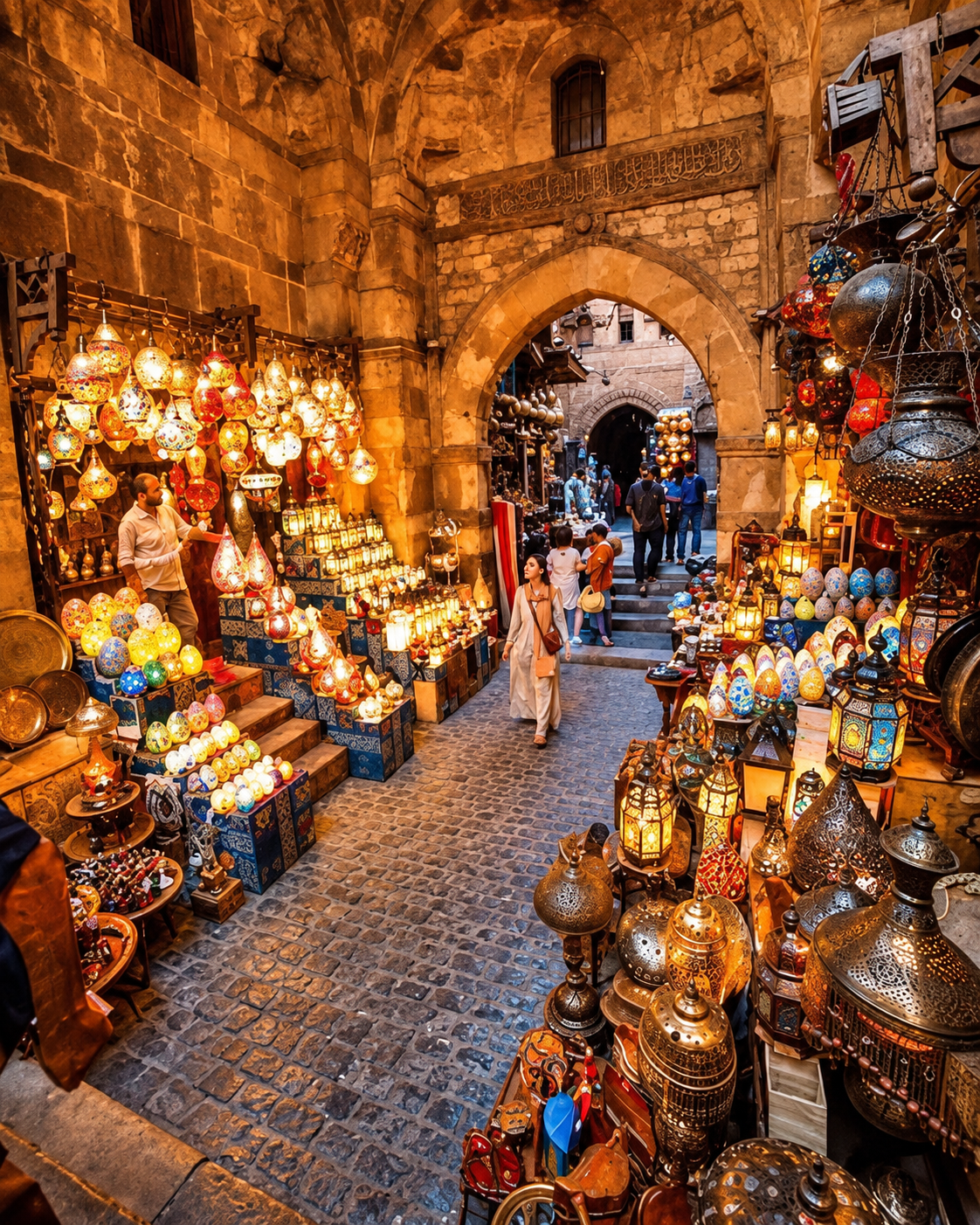
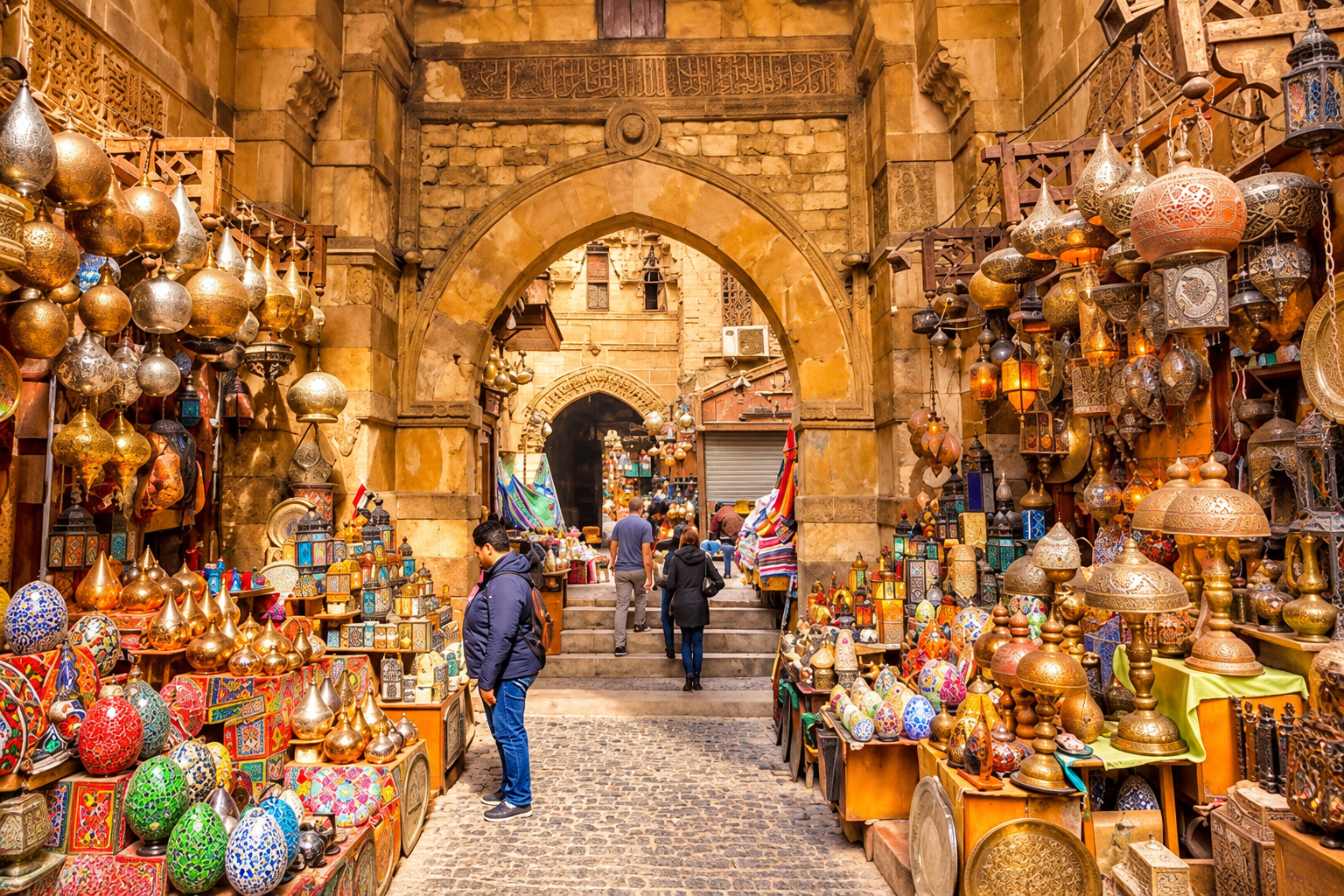
Khan El Khalili is one of the city’s most famous historic commercial districts.
Its narrow streets, shops, workshops, cafés, and traditional façades create an environment where architecture and commerce are closely connected.
The market is particularly interesting because visitors can see how historic commercial spaces continue to function today.
Look beyond the merchandise and notice the doors, stone façades, balconies, arches, and narrow passages.
These details reveal another aspect of Cairo’s architectural heritage.
Hidden Details in Cairo’s Streets
You do not always need to enter a famous monument to discover beautiful architecture.
Some of Cairo’s hidden treasures can be found simply by looking upward or slowing down.
Old doors may contain intricate carvings.
Historic buildings may feature decorative balconies.
Traditional windows may include wooden screens.
Stone façades may contain inscriptions that reveal the building’s history.
Small fountains, arches, courtyards, and decorative tiles can also appear in unexpected places.
This is why exploring Cairo on foot with a knowledgeable local guide can be so rewarding.
Architecture and Local Life
One of the most fascinating aspects of Cairo is the relationship between historic architecture and modern life.
Historic buildings are not always surrounded by silence.
Children walk through nearby streets.
Shopkeepers open their businesses.
Residents meet at cafés.
Markets operate beside centuries-old structures.
Motorcycles and modern vehicles move through streets that have existed for generations.
This creates a unique urban environment in which history is not separated from everyday life.
Cairo’s architecture remains part of the living city.
Cairo for Architecture and Photography Lovers
Cairo is an excellent destination for architectural photography.
Different neighborhoods offer different visual styles.
Islamic Cairo provides medieval stone architecture and decorative details.
Coptic Cairo offers historic churches and Roman-era structures.
The Citadel provides monumental architecture and panoramic city views.
Traditional houses reveal wooden screens, courtyards, and handcrafted details.
Markets provide opportunities to photograph architecture alongside everyday life.
Early morning and late afternoon can provide attractive natural light, depending on the location and season.
Travelers should always respect local customs and ask permission when photographing people closely.
Discover Cairo’s Hidden Treasures
The most rewarding Cairo experiences are sometimes found away from the city’s most famous attractions.
A small doorway can lead to a historic house.
A narrow alley can reveal a medieval monument.
A traditional market can preserve centuries-old commercial traditions.
A quiet courtyard can demonstrate architectural ideas that existed long before modern air conditioning.
These details help explain why Cairo is more than an ancient destination.
It is a living architectural museum.
A Different Way to Explore Cairo
If you have already visited the Giza Pyramids and major museums, exploring Cairo’s architecture can provide a completely different experience.
Instead of focusing only on famous landmarks, you can discover the city’s historic neighborhoods, traditional houses, old markets, religious monuments, city gates, and hidden architectural details.
A private guide can help connect the buildings with the people and historical periods behind them.
This turns an ordinary walk into a deeper cultural experience.
Experience Cairo’s Architecture with Let’s Explore Egypt
Let’s Explore Egypt can arrange private cultural experiences focused on Cairo’s architecture and hidden treasures.
Your experience can include areas such as Islamic Cairo, Al-Muizz Street, Khan El Khalili, Bab Zuweila, the Citadel, Coptic Cairo, historic houses, and traditional markets, depending on your interests and available time.
Whether you are an architecture enthusiast, photographer, history lover, or traveler searching for something beyond the usual tourist route, Cairo has countless stories waiting to be discovered.
The Pyramids show you the greatness of ancient Egypt.
But the streets of Cairo reveal another story—the story of a city that has continued to live, grow, and reinvent itself for centuries.
Explore the architecture. Discover the hidden treasures. Experience the Cairo that exists beyond the famous landmarks.
Frequently Asked Questions
FAQs
The tour takes approximately 7–8 hours.
Yes. The experience is arranged as a private tour with private transportation and a dedicated guide.
The program focuses on Historic Cairo, Al-Muizz Street, Bab Zuweila, Bayt Al-Suhaymi, Al-Azhar, Sultan Hassan, and Al-Rifa'i.
Yes, a professional English-speaking Egyptologist accompanies the tour.
Yes, pickup and drop-off are available from hotels in Cairo and Giza.
Yes. The historic streets, courtyards, facades, domes, minarets, wooden mashrabiyas, and markets provide many photography opportunities, subject to site regulations.
Comfortable walking shoes and modest clothing are recommended because the tour includes historic mosques and religious sites.
Yes. The private format allows the pace and duration of walking sections to be adjusted.
Yes. Additional time at Khan El Khalili Bazaar can be added to the itinerary.
Yes. The Museum of Islamic Art can be added if you would like to extend the architectural and cultural experience.