All About
All About Luxor Day Trip by Flight from Cairo
Often described as the world’s greatest open-air museum, Luxor is one of the most extraordinary destinations on Earth. Home to magnificent temples, royal tombs, colossal statues, and timeless monuments, Luxor preserves the legacy of ancient Egypt like nowhere else. A Luxor Day Trip by Flight from Cairo offers travelers the unique opportunity to explore this remarkable city in just one day, making it an ideal choice for visitors with limited time who don’t want to miss Egypt’s most iconic archaeological treasures.
Located approximately 650 kilometers (400 miles) south of Cairo on the banks of the Nile River, Luxor was once the ancient city of Thebes, the glorious capital of Egypt during the New Kingdom (c. 1550–1070 BC). It served as the political, religious, and cultural heart of the Egyptian Empire, where some of history’s greatest pharaohs ruled and commissioned monumental temples and tombs that continue to amaze visitors more than 3,000 years later.
Thanks to convenient domestic flights, you can leave Cairo early in the morning, spend a full day exploring Luxor’s incredible landmarks with a licensed Egyptologist guide, and return to Cairo the same evening. This carefully planned journey combines comfort, efficiency, and unforgettable experiences.
Why Visit Luxor?
Luxor is unlike any other destination in Egypt. While Cairo is famous for the Giza Pyramids and Alexandria for its Mediterranean charm, Luxor offers an unparalleled concentration of ancient temples, tombs, and monuments from the golden age of the Pharaohs.
More than one-third of the world’s ancient monuments are believed to be located in and around Luxor. Every corner of the city tells a story of powerful kings, ambitious queens, skilled craftsmen, and fascinating religious beliefs that shaped one of history’s greatest civilizations.
A day trip to Luxor allows you to witness these wonders firsthand without needing to spend the night, making it one of the most rewarding excursions from Cairo.
The Ancient City of Thebes
Long before it became known as Luxor, the city was called Thebes, the capital of ancient Egypt during the New Kingdom. It was from here that legendary rulers such as Thutmose III, Hatshepsut, Seti I, Ramses II, and Tutankhamun governed one of the largest empires of the ancient world.
Thebes was dedicated to the worship of Amun-Ra, the king of the gods, and became one of the wealthiest cities in antiquity. Massive temples, ceremonial avenues, and magnificent palaces reflected its political power and religious importance.
Today, the remains of ancient Thebes form part of the UNESCO World Heritage Site known as Ancient Thebes with its Necropolis.
Karnak Temple Complex
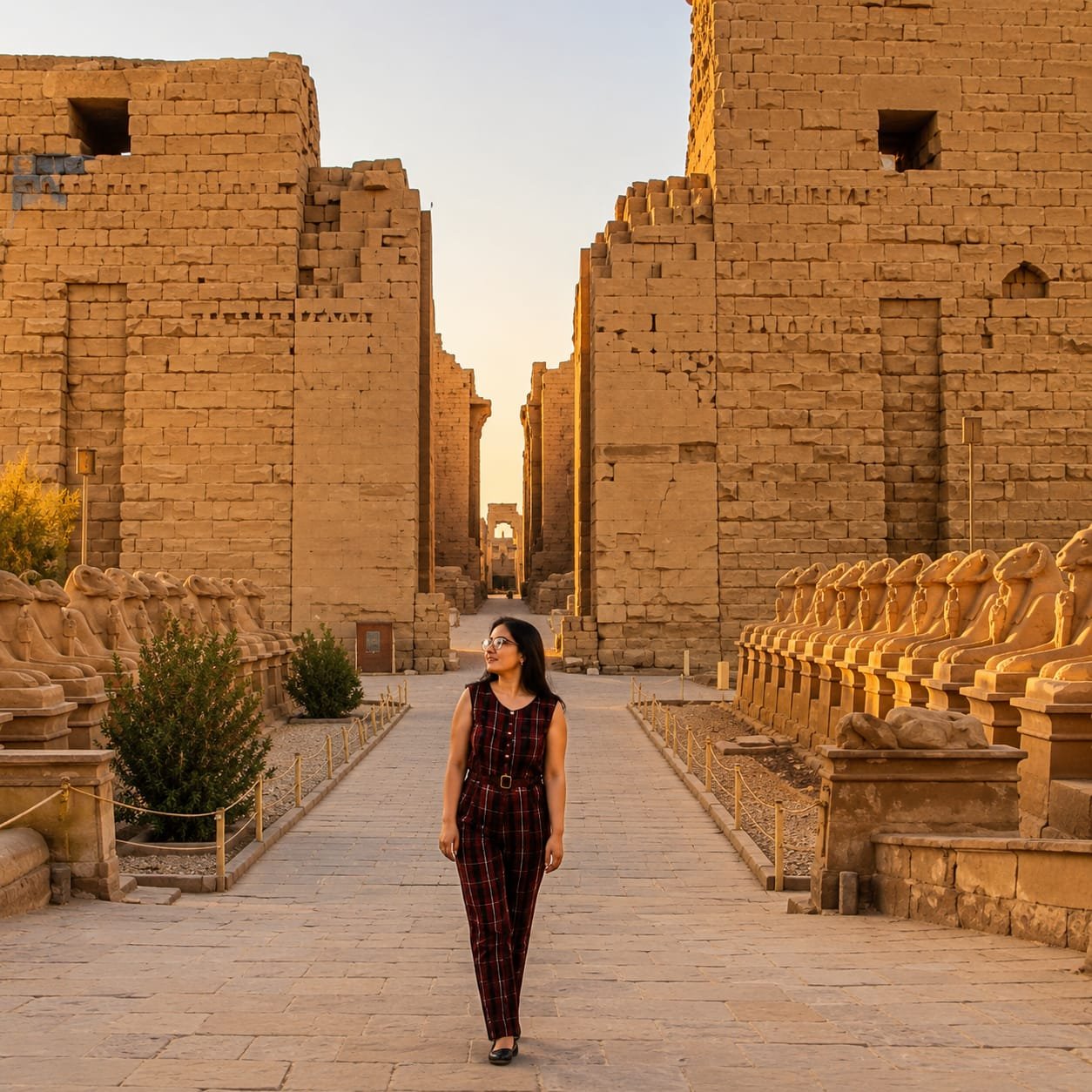
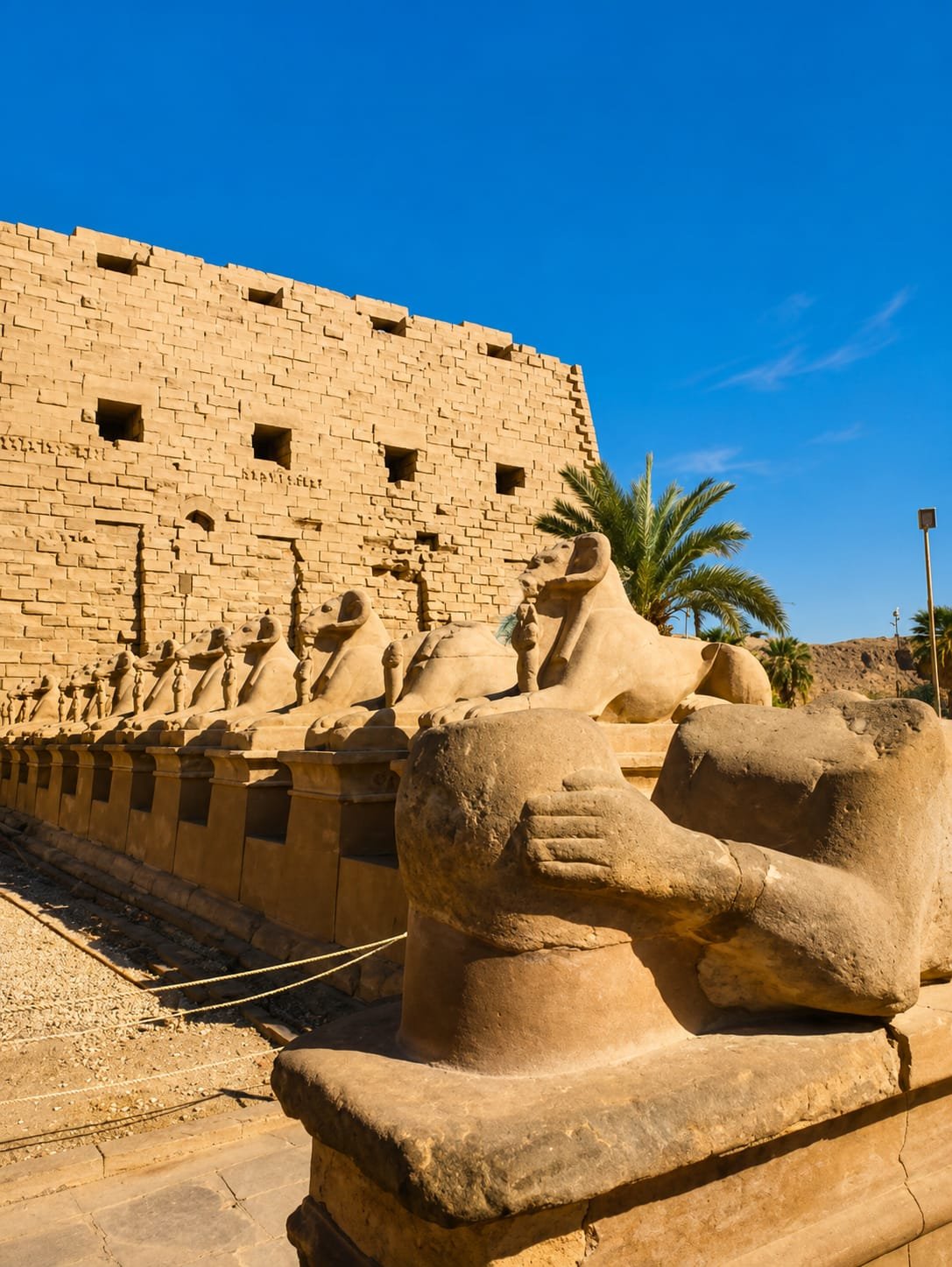
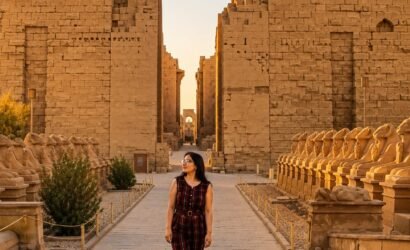
One of the highlights of any Luxor tour is the magnificent Karnak Temple Complex, the largest religious complex ever built.
Construction began around 2,000 BC and continued for nearly two thousand years, with more than thirty pharaohs contributing to its expansion.
Visitors can explore:
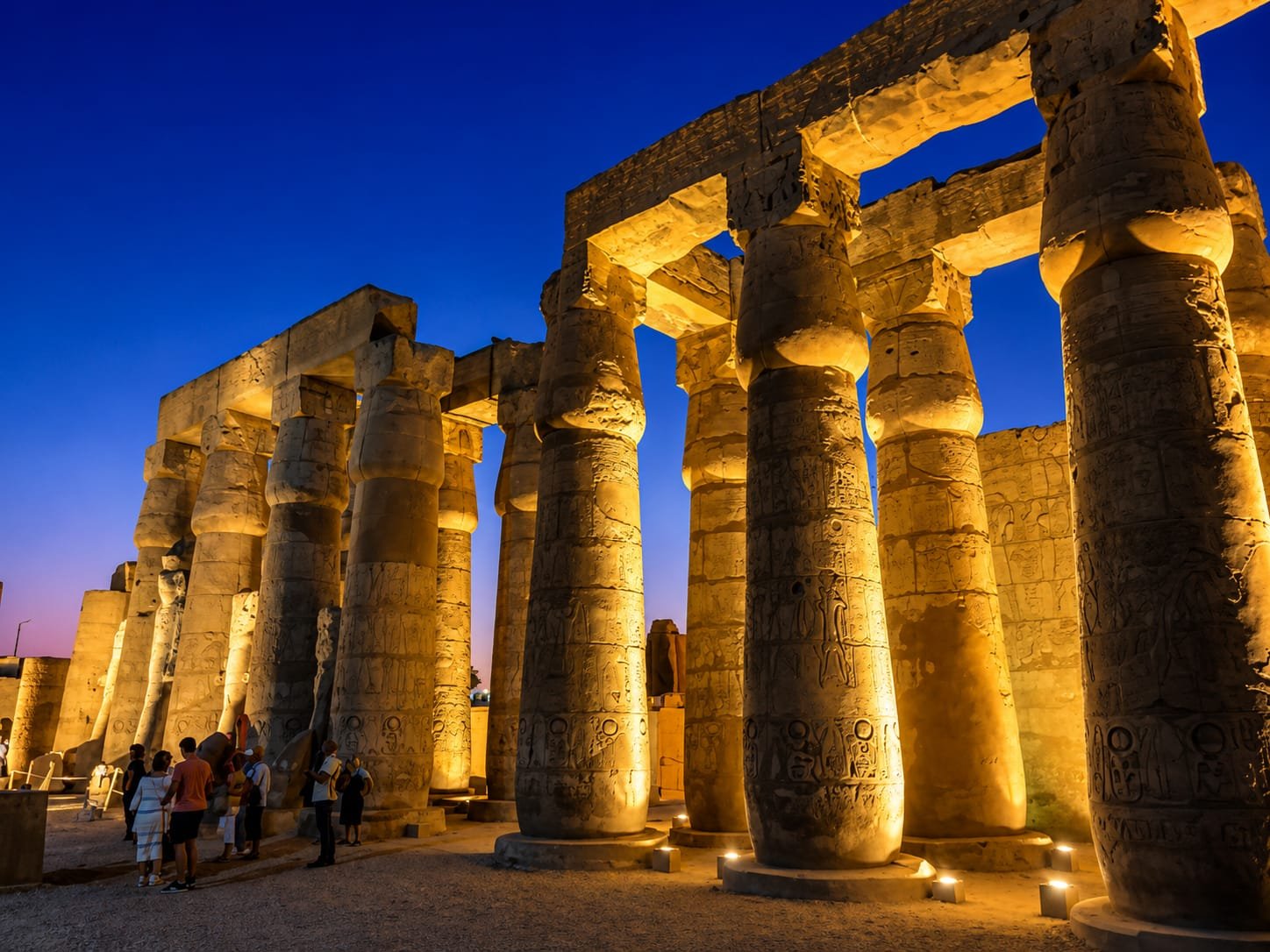
The Great Hypostyle Hall with 134 giant columns
Sacred Lake
Massive obelisks
Ancient chapels
Monumental gateways (Pylons)
Intricate hieroglyphic inscriptions
The temple was dedicated primarily to Amun-Ra, but also honors Mut and Khonsu, forming the famous Theban Triad.
Walking through Karnak is like stepping into the heart of ancient Egyptian religion.
The Great Hypostyle Hall
Among Karnak’s most breathtaking features is the Great Hypostyle Hall.
Covering over 5,000 square meters, it contains 134 towering sandstone columns, some reaching heights of over 20 meters (65 feet).
The beautifully carved hieroglyphics and detailed reliefs depict battles, religious ceremonies, and offerings made by powerful pharaohs.
This remarkable hall remains one of the greatest architectural achievements of the ancient world.
Crossing to Luxor’s West Bank
The Nile River divides Luxor into two symbolic halves.
East Bank – The City of the Living
West Bank – The City of the Dead
Ancient Egyptians believed the setting sun represented death and rebirth, which is why royal tombs were built on the west side of the Nile.
Crossing the river marks the beginning of your journey into Egypt’s sacred royal necropolis.
Valley of the Kings
Hidden beneath the limestone hills of Luxor lies the legendary Valley of the Kings, where Egypt’s New Kingdom pharaohs were buried between the 16th and 11th centuries BC.
More than 60 royal tombs have been discovered here, each carefully carved into the mountains to protect the kings and their treasures.
Visitors can explore several beautifully decorated tombs featuring colorful wall paintings that have survived for over 3,000 years.
These artworks illustrate scenes from ancient religious texts, including:
The Book of the Dead
The Book of Gates
The Amduat
The Litany of Ra
Each tomb tells the story of the pharaoh’s journey into the afterlife.
Tutankhamun’s Tomb
Perhaps the valley’s most famous discovery is the Tomb of Tutankhamun, uncovered in 1922 by British archaeologist Howard Carter.
Unlike many royal tombs that had been looted over the centuries, Tutankhamun’s burial chamber remained remarkably intact.
Its discovery revealed thousands of treasures, including the famous golden funerary mask that has become a symbol of ancient Egypt.
Today, visitors can enter the tomb with a separate entrance ticket and see the young king’s burial chamber.
Temple of Queen Hatshepsut
One of Luxor’s architectural masterpieces is the spectacular Mortuary Temple of Queen Hatshepsut at Deir el-Bahari.
Built against dramatic limestone cliffs, the temple features elegant terraces connected by long ramps, creating one of the most unique designs in ancient Egyptian architecture.
Hatshepsut was one of Egypt’s greatest rulers and the country’s most successful female pharaoh. During her reign, Egypt experienced prosperity, extensive trade, and remarkable construction projects.
Her temple celebrates these achievements through beautifully carved reliefs and impressive statues.
Colossi of Memnon
Standing proudly on Luxor’s West Bank are the famous Colossi of Memnon, two massive stone statues depicting Pharaoh Amenhotep III.
Each statue stands approximately 18 meters (60 feet) tall and has guarded the entrance to the king’s mortuary temple for more than 3,400 years.
Although much of the original temple has disappeared, the Colossi remain one of Luxor’s most photographed landmarks.
In ancient times, one of the statues was believed to “sing” at sunrise after being damaged by an earthquake, attracting visitors from across the Roman Empire.
Life Along the Nile
The Nile River is the lifeblood of Luxor.
As you travel between archaeological sites, you’ll pass:
Green farmlands
Date palm groves
Sugarcane fields
Traditional villages
Local markets
Feluccas and motorboats
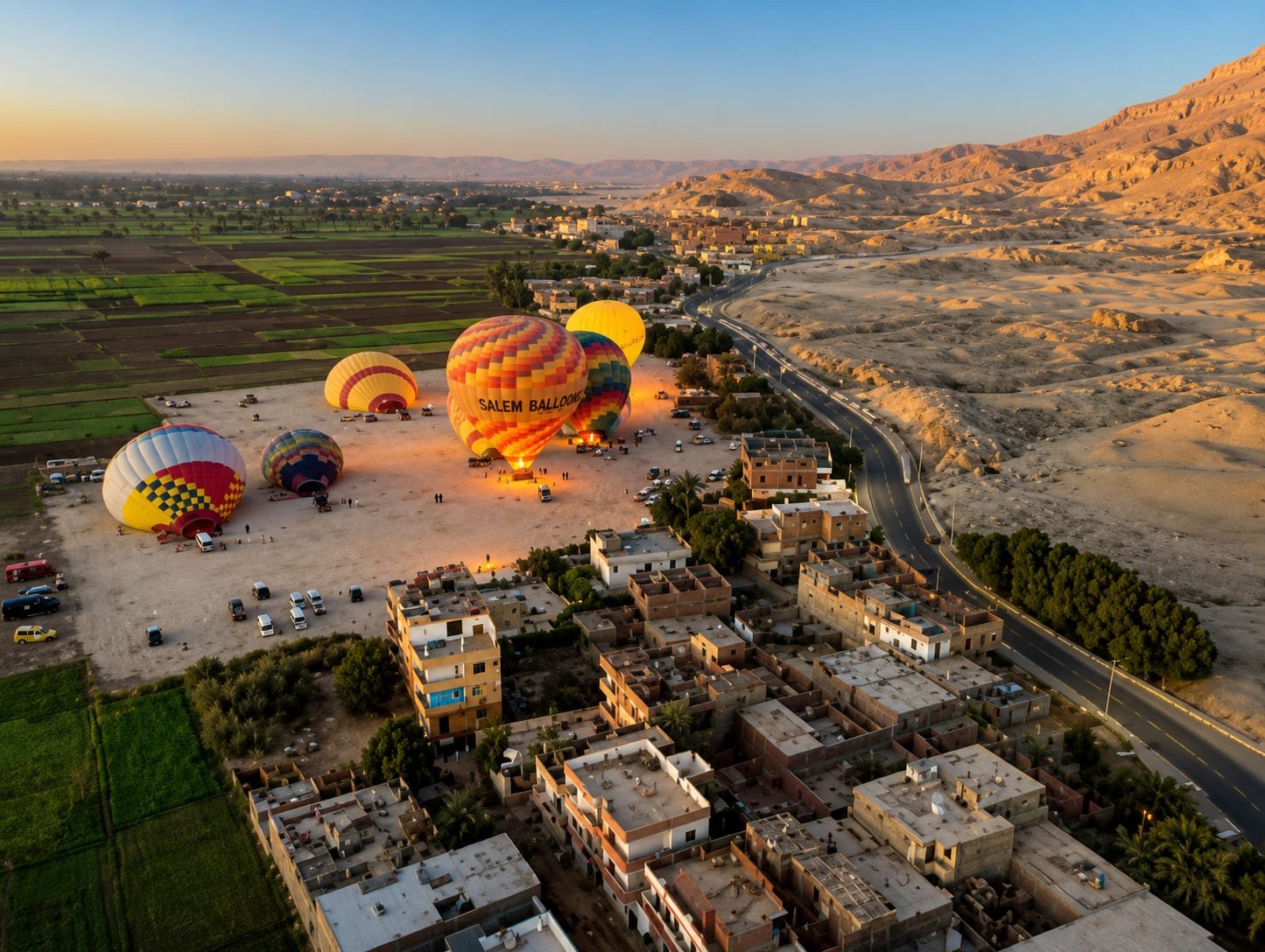
This beautiful contrast between fertile fields and desert mountains creates some of Egypt’s most memorable scenery.
Egyptian Cuisine in Luxor
Many day tours include lunch at a local restaurant, where you’ll enjoy traditional Egyptian dishes such as:
Grilled chicken
Kofta
Mixed grill
Rice
Fresh salads
Tahini
Egyptian bread
Vegetarian specialties
Some restaurants also offer spectacular views of the Nile, making lunchtime another highlight of the day.
Why Choose a Private Tour?
A private Luxor day trip provides numerous advantages compared to group tours.
Benefits include:
Personalized attention
Flexible itinerary
Comfortable private transportation
Licensed Egyptologist guide
More time at each attraction
No waiting for large groups
Hotel pickup and drop-off
Better photography opportunities
This personalized experience allows you to explore Luxor at your own pace while gaining deeper insight into its remarkable history.
Best Time to Visit Luxor
Luxor can be visited throughout the year, but the most comfortable months are:
October
November
December
January
February
March
April
These months offer pleasant temperatures for sightseeing and outdoor exploration.
During the summer, early morning flights help you enjoy cooler temperatures before the afternoon heat.
What to Bring
For a comfortable and enjoyable experience, bring:
Passport
Comfortable walking shoes
Lightweight clothing
Hat
Sunglasses
Sunscreen
Camera
Small amount of cash
Light jacket during winter
Photography Opportunities
Luxor is one of the most photogenic destinations in Egypt.
Top photography locations include:
Karnak Temple columns
Valley of the Kings entrance
Hatshepsut Temple terraces
Colossi of Memnon
Nile River viewpoints
Desert mountains
Ancient hieroglyphics
Early morning light provides ideal conditions for spectacular photographs.
Why a Day Trip by Flight?
Traveling by air allows you to maximize your sightseeing time while avoiding the long overland journey from Cairo. With a flight of approximately one hour each way, you can comfortably experience Luxor’s most famous attractions in a single day and return to Cairo in the evening.
This option is perfect for travelers with tight schedules who still want to visit one of Egypt’s most iconic destinations.
A Journey Through the Heart of Ancient Egypt
A Luxor Day Trip by Flight from Cairo is much more than a sightseeing excursion—it’s a journey into the heart of one of the world’s greatest civilizations. From the towering columns of Karnak Temple to the hidden royal tombs of the Valley of the Kings, the elegant terraces of the Temple of Hatshepsut, and the majestic Colossi of Memnon, every stop reveals another chapter in Egypt’s extraordinary history.
Whether you’re an archaeology enthusiast, a history lover, a photographer, or simply a curious traveler, Luxor promises an unforgettable experience. With convenient flights, expert guidance, and carefully planned itineraries, this day trip offers the perfect opportunity to witness the timeless wonders of ancient Egypt and create memories that will last a lifetime.