


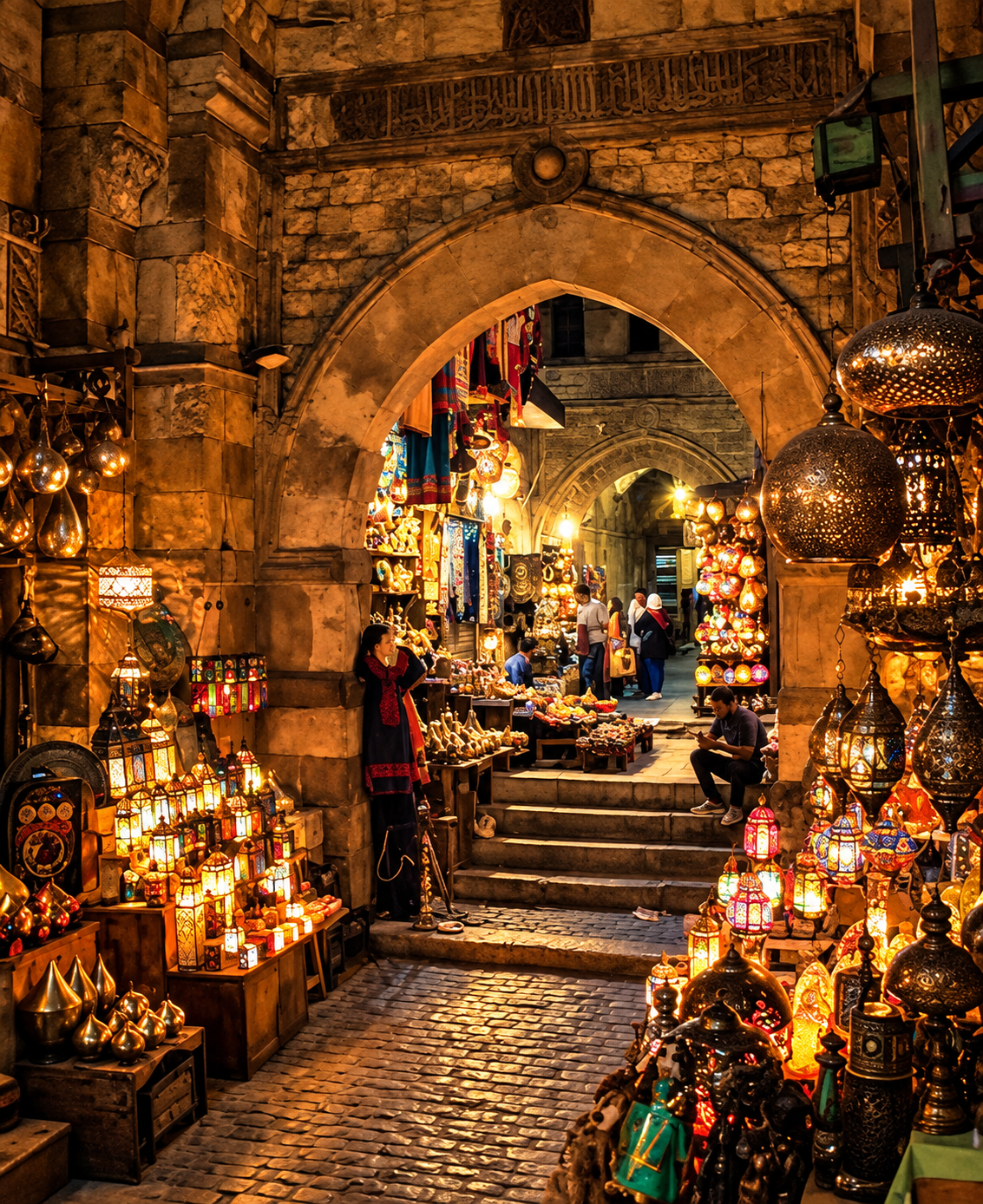
Overview
Discover the authentic flavors and everyday atmosphere of Cairo on a private Local Markets & Street Food Experience. Explore lively traditional markets, wander through historic streets, and taste popular Egyptian dishes and snacks with a local guide. This experience offers a different side of Cairo beyond the major monuments, focusing on local food, culture, shopping, and daily life.
Highlights
- Explore traditional Cairo markets
- Taste authentic Egyptian street food
- Khan El Khalili Bazaar
- Historic Cairo streets
- Local snacks and sweets
- Egyptian tea and traditional drinks
- Local shopping and souvenirs
- Private cultural experience
- Professional English-speaking guide
- Flexible itinerary
- Hotel pickup and drop-off
Itinerary Description
Explore the colorful streets of Historic Cairo and its traditional markets, including Khan El Khalili and the Al-Muizz area. Walk through local shops and food stalls, discover how Egyptians shop and eat, and taste a selection of authentic Egyptian street foods and traditional sweets with your guide. Finish with a local tea or coffee before returning to your hotel.
Hotel Pickup: Meet your guide at your hotel and transfer to Historic Cairo.
Khan El Khalili: Explore the famous traditional market, browse local shops, spices, handicrafts, perfumes, and souvenirs.
Al-Muizz Street: Walk through one of Cairo's historic streets and admire its traditional architecture and atmosphere.
Local Food Experience: Taste popular Egyptian street foods such as koshari, ful, taameya, hawawshi, and freshly baked baladi bread, depending on availability and your preferences.
Traditional Sweets: Try local desserts and Egyptian sweets from traditional shops.
Local Café: Enjoy Egyptian tea, coffee, or another traditional drink.
Return: Transfer back to your hotel in Cairo or Giza.
Includes/Excludes
Includes
- Hotel pickup and drop-off
- Private air-conditioned transportation
- Professional English-speaking local guide
- Walking tour of Historic Cairo
- Khan El Khalili visit
- Al-Muizz Street visit
- Selected Egyptian street food tastings
- Traditional Egyptian sweets tasting
- Tea or coffee
- Bottled water
- All transfers mentioned in the itinerary
Excludes
- Additional food or drinks not included in the tasting package
- Alcoholic beverages
- Personal shopping
- Souvenirs
- Optional activities
- Tips and gratuities
- Travel insurance
- Any service not specifically mentioned under Includes
More Info
Cairo is a city best experienced beyond its famous monuments. While the Giza Pyramids, Sphinx, Egyptian Museum, and Grand Egyptian Museum are essential stops for any traveler, some of the most memorable experiences happen in the streets, markets, cafés, and neighborhood food stalls where everyday Cairo comes to life.
A Cairo Local Markets & Street Food Experience offers a different way to discover the Egyptian capital. Instead of simply visiting historical attractions, you can walk through lively markets, sample traditional Egyptian dishes, explore small local shops, and experience the sounds, aromas, and energy of Cairo.
From freshly baked bread and falafel to koshari, grilled meats, Egyptian sweets, and traditional tea, Cairo’s street food scene provides an authentic taste of local culture.
Whether you are visiting Cairo for one day or spending several nights in the city, exploring its markets and food streets can add a completely different dimension to your Egypt vacation.
Why Explore Cairo’s Local Markets?
Cairo’s markets are more than places to shop. They are social spaces where residents buy food, meet friends, work, eat, and go about their daily lives.
Walking through a local market allows visitors to see a side of Cairo that is often missed on traditional sightseeing tours. You can watch vendors prepare fresh products, discover traditional crafts, browse spices and herbs, and interact with local shopkeepers.
The atmosphere can be busy and energetic, especially in popular market areas. Streets may be filled with colorful displays, traditional architecture, cafés, food stalls, and the sounds of people negotiating prices.
For travelers interested in photography, culture, food, and everyday life, Cairo’s markets offer countless opportunities for memorable experiences.
Khan El Khalili Bazaar
One of the most famous market areas in Cairo is Khan El Khalili, located in the historic Islamic Cairo district.
The bazaar has been an important commercial area for centuries and remains one of the city’s most recognizable destinations.
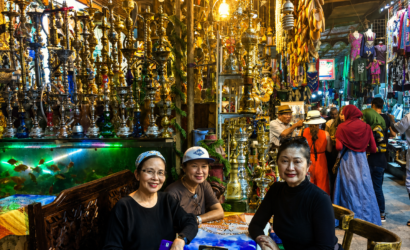
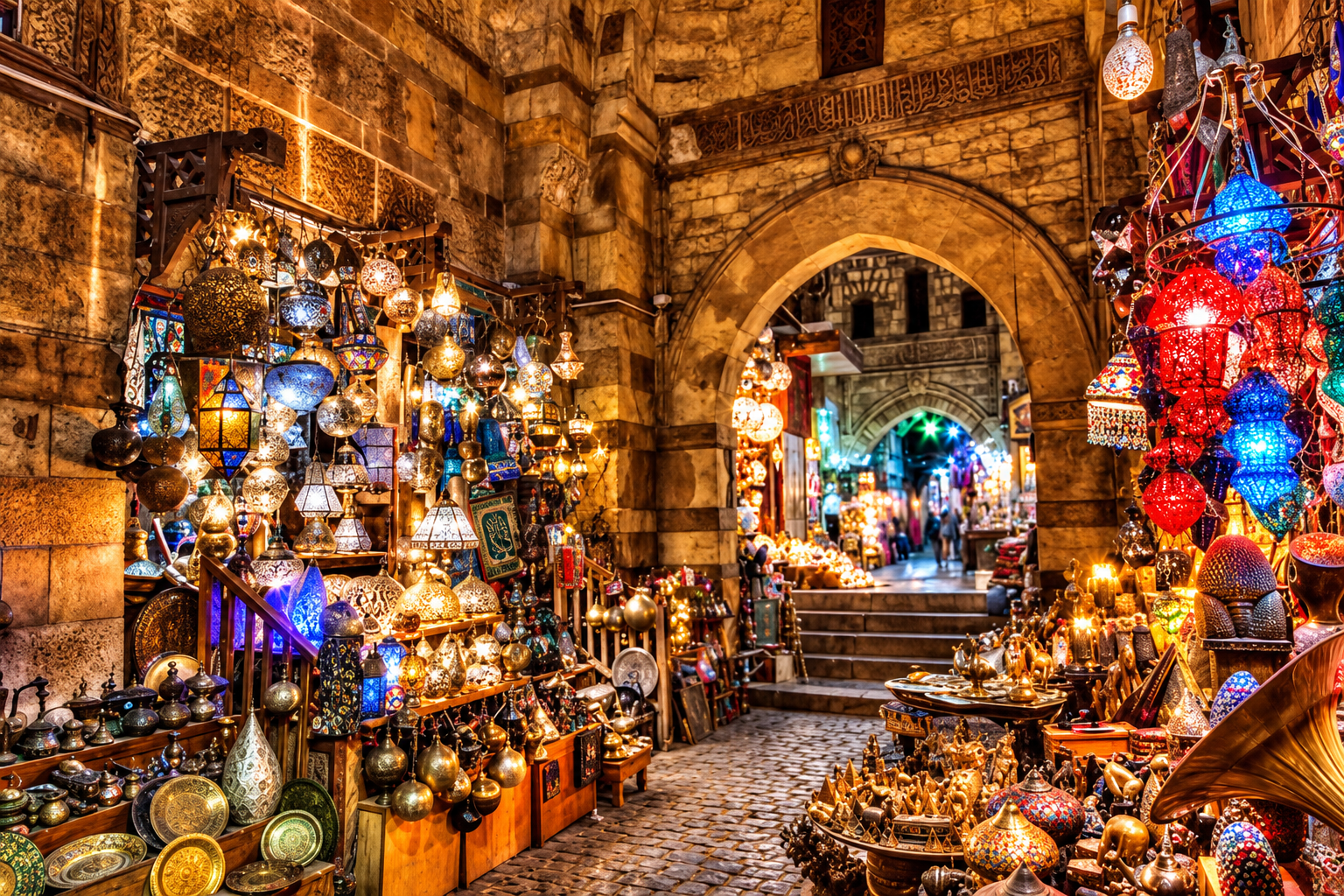
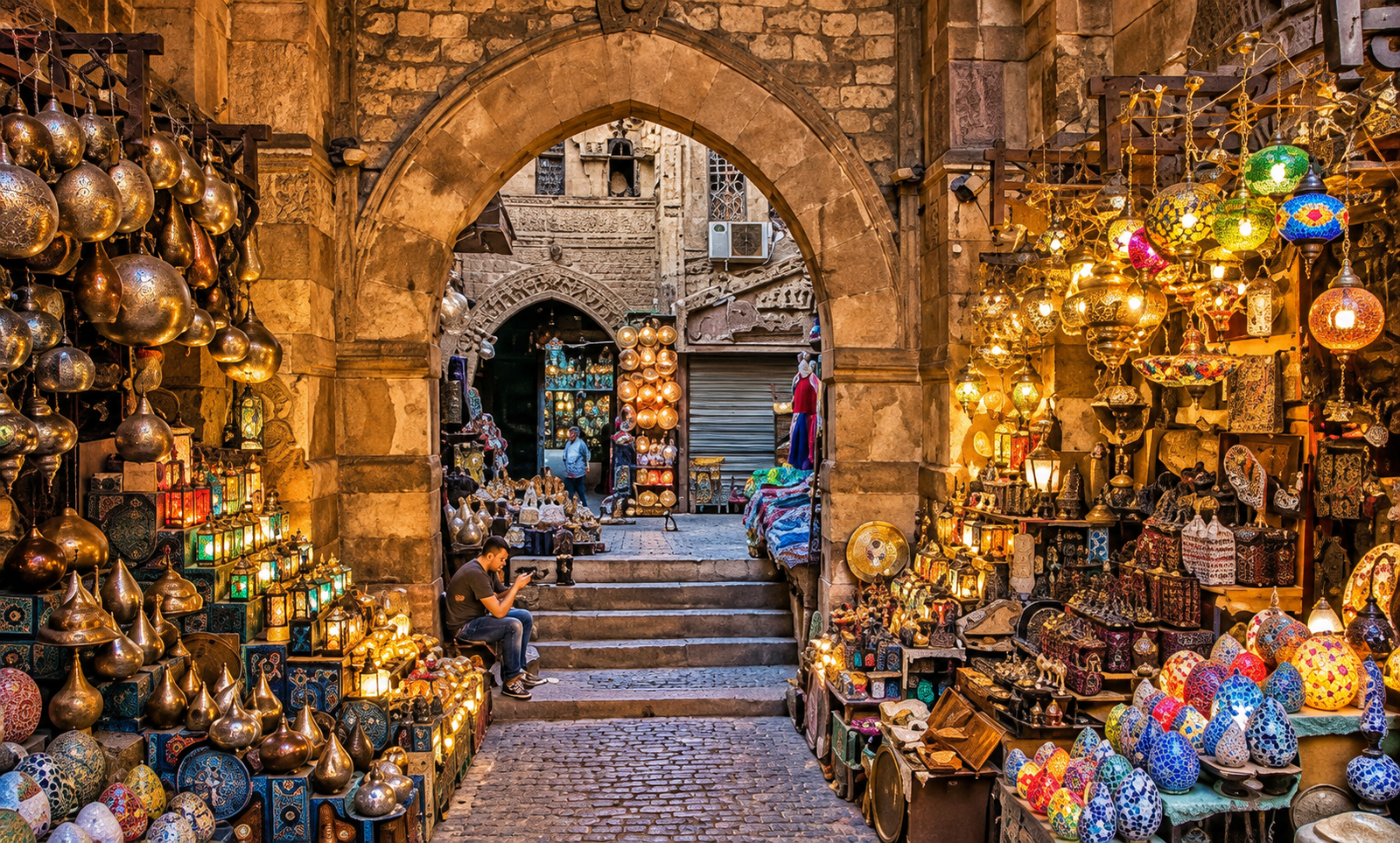
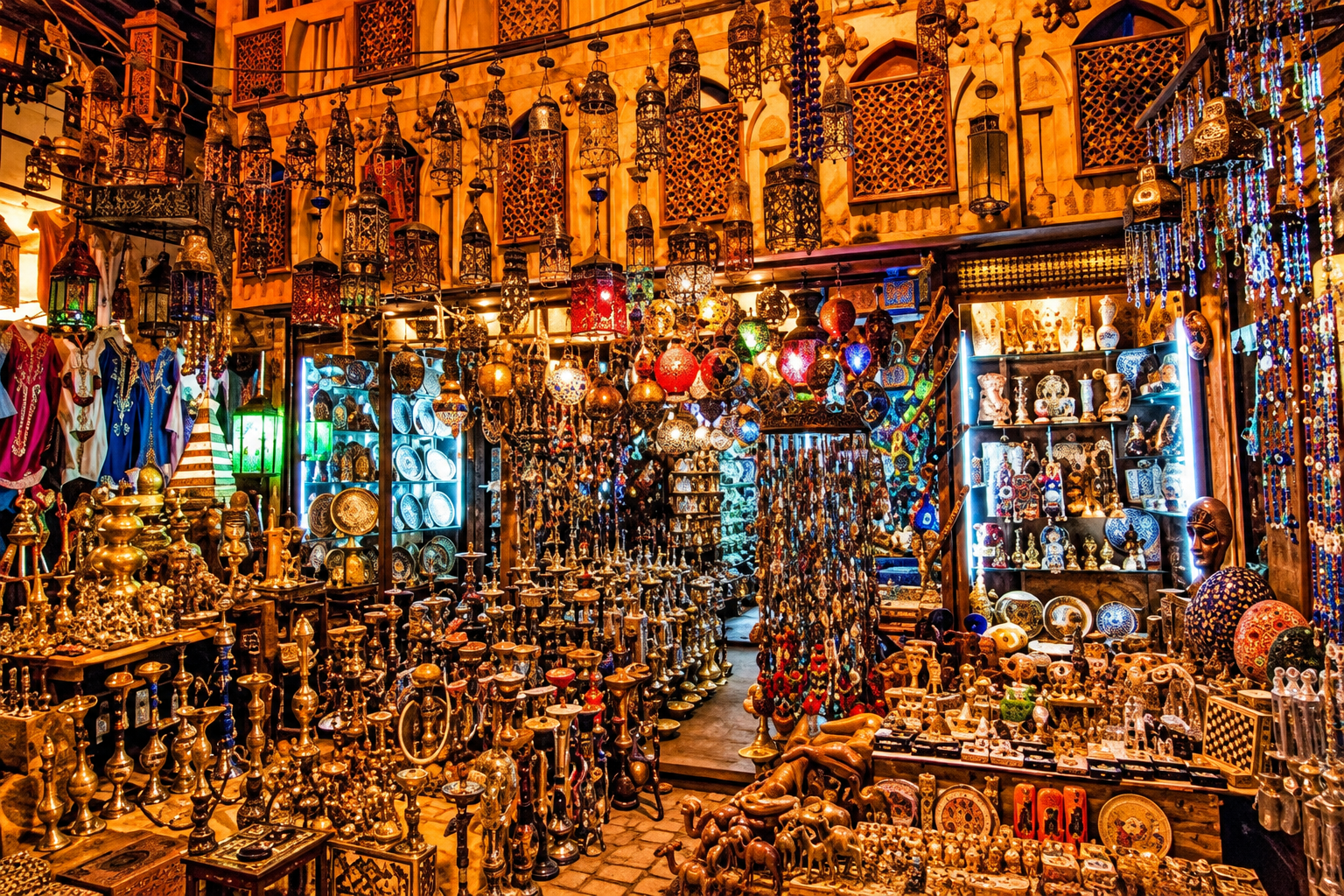
Its narrow streets are filled with shops selling souvenirs, jewelry, traditional lanterns, spices, textiles, perfumes, artwork, and Egyptian handicrafts.
Walking through Khan El Khalili is an experience in itself. You can explore small alleyways, admire traditional Islamic architecture, stop for Egyptian tea, and browse locally made products.
Visitors can also enjoy traditional cafés where they can sit and watch the activity around them.
A visit to Khan El Khalili can easily be combined with other attractions in Islamic Cairo, including historic mosques, old streets, and architectural landmarks.
Egyptian Street Food You Should Try
Food is one of the highlights of exploring Cairo’s local neighborhoods.
Egyptian cuisine is diverse, affordable, flavorful, and deeply connected to the country’s history and everyday culture.
Here are some of the foods you may encounter during a Cairo street food experience.
Koshari
Koshari is one of Egypt’s most famous traditional dishes.
It combines rice, lentils, pasta, chickpeas, fried onions, tomato sauce, and a spicy vinegar-based sauce.
The ingredients may sound simple, but together they create a filling and flavorful meal.
Koshari is especially popular among locals because it is inexpensive, satisfying, and widely available throughout Cairo.
Trying koshari from a traditional local restaurant is one of the easiest ways to experience an everyday Egyptian meal.
Egyptian Falafel – Ta’ameya
Egyptian falafel is known locally as ta’ameya.
Unlike many versions of falafel made primarily with chickpeas, traditional Egyptian ta’ameya is usually prepared using fava beans.
The mixture is seasoned with herbs and spices, shaped into small portions, and fried until crisp on the outside while remaining soft inside.
Ta’ameya is commonly served with bread, vegetables, pickles, and tahini.
It is a popular breakfast and street food option and is an excellent choice for travelers who want to try a traditional Egyptian snack.
Ful Medames
Another important Egyptian food is ful medames, a dish made from cooked fava beans.
It is traditionally seasoned with ingredients such as olive oil, lemon juice, garlic, cumin, and other spices.
Ful is commonly eaten for breakfast and can be served with Egyptian bread and vegetables.
For visitors, trying ful from a traditional local restaurant provides an opportunity to experience one of the country’s most everyday foods.
Hawawshi
Hawawshi is a popular Egyptian street food consisting of seasoned minced meat stuffed inside bread and baked or grilled.
The meat is usually mixed with onions, peppers, herbs, and spices.
The bread becomes crispy on the outside while absorbing the flavors of the meat inside.
It is a satisfying option for travelers looking to try Egyptian flavors beyond the better-known dishes.
Grilled Meat and Kebabs
Egyptian restaurants and street food areas also offer grilled meats, including kofta, kebab, chicken, and other specialties.
Kofta is typically made from seasoned minced meat shaped into elongated portions and grilled over charcoal.
The smoky flavor of charcoal grilling is an important part of Egyptian dining culture.
Depending on the restaurant, grilled meat may be served with bread, rice, salads, tahini, vegetables, or pickles.
Egyptian Bread and Local Bakeries
Bread plays an important role in Egyptian cuisine.
Traditional Egyptian bread, commonly known as aish baladi, is a staple in everyday meals.
Walking through local neighborhoods, you may find bakeries producing fresh bread throughout the day.
The smell of freshly baked bread is one of the simple pleasures of exploring Cairo’s streets.
Some local bakeries also prepare pastries and other baked goods that are popular with residents.
For travelers interested in food culture, visiting a bakery can provide a glimpse into an important part of everyday Egyptian life.
Egyptian Sweets
No Cairo food experience is complete without trying traditional Egyptian desserts.
Egypt has a wide variety of sweets influenced by Egyptian, Arab, Ottoman, and Mediterranean culinary traditions.
Popular choices include basbousa, kunafa, zalabya, and umm ali.
Basbousa
Basbousa is a sweet semolina cake soaked in syrup and often topped with almonds or other nuts.
It has a soft texture and a rich sweetness.
Kunafa
Kunafa is made using fine pastry strands or related dough preparations combined with a sweet filling and syrup.
It is particularly popular during celebrations and Ramadan but can be found throughout the year.
Zalabya
Zalabya consists of small pieces of fried dough covered with syrup, sugar, or other toppings.
It is a popular sweet snack and is often served fresh.
Umm Ali
Umm Ali is a traditional Egyptian dessert made from pastry or bread combined with milk, sugar, nuts, and other ingredients before being baked.
It is typically served warm.
Traditional Egyptian Drinks
Food is only part of the experience. Cairo’s traditional drinks are also worth exploring.
Egyptian tea is one of the most common beverages and is frequently served in local cafés and restaurants.
Mint tea is another popular choice.
Visitors may also encounter sahlab, especially during cooler months, a warm milk-based drink traditionally flavored with ingredients such as cinnamon, coconut, and nuts.
Fresh fruit juices are also common in Cairo, particularly mango, sugarcane, and guava juice.
Sugarcane juice, known locally as asab, is particularly refreshing on a hot day.
Local Cafés and Egyptian Coffee Culture
Cafés are an important part of Cairo’s social life.
A traditional café can be a great place to take a break during a market visit.
Locals may gather to drink tea or coffee, talk with friends, watch football, play backgammon, or simply observe the activity around them.
Egyptian coffee is generally strong and can be prepared with varying amounts of sugar according to personal preference.
Visitors can also enjoy shisha at some traditional cafés, although travelers should check the rules and atmosphere of individual establishments.
A Typical Cairo Street Food Experience
A local food tour can be customized according to your interests, but a typical experience may begin with a hotel pickup in Cairo or Giza.
From there, your local guide can take you into one of Cairo’s lively neighborhoods.
You may begin with a traditional breakfast or snack, such as ta’ameya and ful, before exploring a local market.
The experience can then continue through food stalls, bakeries, spice shops, traditional cafés, and local restaurants.
Depending on the itinerary, you can sample several Egyptian dishes rather than having one large meal.
A local guide can explain what each dish is, how it is prepared, and its role in Egyptian culture.
The tour can also include time for shopping and photography.
Combining Markets With Historic Cairo
One of the advantages of a Cairo local market tour is that it can easily be combined with sightseeing.
For example, travelers can explore Khan El Khalili and then continue to historic Islamic Cairo.
Another option is to combine a food experience with visits to important attractions in central Cairo.
This makes a local food tour particularly useful for travelers with limited time.
Instead of spending an entire day only inside museums or archaeological sites, you can experience history, architecture, food, shopping, and local life within the same itinerary.
Is Cairo Street Food Safe for Tourists?
Food hygiene is naturally an important consideration when trying local street food.
A good approach is to choose busy, established food locations where there is a steady flow of customers and where food is prepared fresh.
Your local guide can also recommend places that are suitable for visitors and explain common foods and ingredients.
Travelers with food allergies or dietary restrictions should inform their guide before the tour.
Vegetarian travelers can also find several traditional Egyptian dishes, including ta’ameya, ful, koshari, salads, and vegetable-based dishes.
If you have specific dietary requirements, it is best to communicate them when booking the experience.
Shopping in Cairo’s Local Markets
Cairo’s markets offer a wide range of products that can make memorable souvenirs.
Depending on the market, visitors may find:
- Egyptian spices and herbs
- Traditional lanterns
- Handmade crafts
- Jewelry
- Cotton products
- Scarves and textiles
- Perfumes
- Papyrus artwork
- Traditional souvenirs
- Handmade decorations
Bargaining is common in many traditional markets.
However, prices and shopping practices vary, so travelers should take their time and compare products before purchasing.
A guide can help explain the local shopping culture and assist with communication when necessary.
Best Time for a Cairo Market and Food Tour
Cairo can be visited throughout the year, but temperatures can be particularly high during summer.
For walking tours, morning and late afternoon or evening can be comfortable options depending on the season.
Evening is especially atmospheric in many market areas because streets become lively with restaurants, cafés, shops, and local activity.
During Ramadan, Cairo’s food and market atmosphere becomes particularly distinctive. Many streets remain active late into the night, and visitors can see special foods and desserts associated with the month.
Travelers visiting during Ramadan should remember that opening hours and meal schedules can differ from normal days.
Who Should Take a Cairo Street Food Tour?
A Cairo local markets and street food experience can suit many types of travelers.
It is especially suitable for:
- First-time visitors to Cairo
- Food lovers
- Couples
- Families
- Solo travelers
- Photographers
- Travelers interested in Egyptian culture
- Visitors looking for experiences beyond major monuments
It can also be a great addition to a traditional Giza Pyramids tour.
After exploring ancient monuments, experiencing modern Cairo through its markets and food provides a fascinating contrast.
Experience Cairo Like a Local
The pyramids tell the story of ancient Egypt, but Cairo’s markets and food streets tell the story of the city’s living culture.
A Cairo Local Markets & Street Food Experience gives travelers the chance to walk through busy neighborhoods, taste traditional Egyptian dishes, meet local people, discover handmade products, and experience the atmosphere of one of the world’s most fascinating cities.
From a plate of koshari to freshly baked aish baladi, from traditional tea in a local café to the colorful streets of Khan El Khalili, these simple experiences often become some of the most memorable moments of an Egypt vacation.
If you want to see Cairo beyond the traditional tourist attractions, exploring its local markets and street food is an excellent way to experience the city from a different perspective.
Book Your Cairo Local Markets & Street Food Experience
Make your Cairo visit more than a sightseeing trip. Explore local neighborhoods, taste authentic Egyptian food, discover traditional markets, and learn about Cairo’s everyday culture with a local guide.
Let’s Explore Egypt can arrange private Cairo experiences tailored to your schedule, interests, and preferred food stops.
Whether you are staying in Cairo, Giza, or visiting Egypt for a short layover, a local market and street food experience can be added to your itinerary.
Explore Cairo. Taste Egypt. Experience the city like a local.
Frequently Asked Questions
FAQs
The experience takes approximately 5–6 hours.
Yes, it is arranged as a private tour.
Yes, a professional English-speaking local guide accompanies you.
The experience can include Khan El Khalili, Al-Muizz Street, and surrounding traditional market areas.
Depending on availability and your preferences, tastings can include koshari, ful, taameya, hawawshi, baladi bread, pickles, and traditional Egyptian sweets.
Yes, selected food tastings are included in the standard package.
Yes. Vegetarian-friendly dishes such as ful, taameya, koshari, bread, salads, and other suitable foods can be selected.
Yes. You can request specific dishes or avoid foods you do not eat.
Yes. Families can enjoy the markets and food experience, with the walking pace adjusted according to the group.
Yes. You will have opportunities to shop for spices, souvenirs, traditional crafts, perfumes, and other local products.
Comfortable walking shoes and modest, lightweight clothing are recommended.
Yes, the tour can generally be arranged daily, subject to availability.