



Overview
Discover a different side of Egypt with The Real Cairo: Markets, Crafts & Coffee, a private cultural experience through the historic streets and lively neighborhoods of Cairo. Move beyond the major monuments and experience the city’s everyday atmosphere through traditional markets, local crafts, historic alleyways, and a relaxing coffeehouse stop.
Highlights
- Historic Cairo
- Khan El Khalili Bazaar
- El Moez Street
- Traditional Egyptian crafts
- Local artisan workshops
- Copper and brass handicrafts
- Lanterns and handmade souvenirs
- Traditional Egyptian coffee
- Local tea and herbal drinks
- Ahwa Shaabi experience
- Historic alleys and architecture
- Private cultural tour
- Local shopping
- Photography opportunities
- Professional Egyptologist / local cultural guide
Itinerary Description
Experience the authentic atmosphere of Cairo on a private walking tour through Historic Cairo, El Moez Street, and Khan El Khalili. Explore colorful markets and traditional artisan workshops, discover handmade Egyptian crafts and local products, and learn about Cairo's historic neighborhoods. Finish the experience at a traditional Ahwa Shaabi where you can enjoy Egyptian coffee, tea, or a local herbal drink while watching everyday Cairo life before returning to your hotel.
Hotel Pickup: Pickup from your hotel in Cairo or Giza and transfer to Historic Cairo.
Historic Cairo: Begin your walking experience through the old streets and traditional neighborhoods.
El Moez Street: Explore one of Cairo's most atmospheric historic streets, surrounded by Islamic architecture, traditional shops, and artisan workshops.
Crafts & Artisan Shops: Discover handmade lanterns, copper and brass products, leather goods, textiles, jewelry, spices, and traditional souvenirs.
Khan El Khalili: Walk through the famous bazaar and browse its colorful market stalls and local shops.
Local Coffee Experience: Stop at a traditional Ahwa Shaabi and enjoy Egyptian coffee, mint tea, hibiscus, or another local drink.
Free Time: Enjoy additional shopping, photography, and local exploration.
Return: Transfer back to your hotel in Cairo or Giza.
Includes/Excludes
Includes
- Hotel pickup and drop-off in Cairo or Giza
- Private air-conditioned transportation
- Professional English-speaking local guide
- Visit to traditional Cairo markets
- Explore local craft workshops and artisan areas
- Coffee or traditional Egyptian tea
- Opportunity to meet local craftsmen
- Cultural and walking experience
- Bottled water
- Private sightseeing experience
Excludes
- Meals
- Additional food and drinks
- Personal shopping expenses
- Souvenirs and handicrafts
- Optional activities or workshops
- Tips and gratuities
- Travel insurance
- Any service not specifically mentioned under Includes
More Info
Cairo is a city that should not only be visited—it should be experienced.
Beyond the pyramids, museums, and famous monuments is another side of the capital where narrow streets are filled with local markets, craftsmen, traditional cafés, street food, old buildings, and the everyday rhythm of Cairo.
This is the real Cairo: noisy, colorful, energetic, historic, and full of character.
A journey through the city’s markets and traditional neighborhoods offers an opportunity to see how people shop, work, drink coffee, meet friends, and preserve crafts that have been part of Cairo’s identity for generations.
Historic Cairo itself preserves entire neighborhoods rather than simply individual monuments, with streets and markets historically connected to specific crafts and commercial activities. UNESCO World Heritage Centre
Start at Khan El-Khalili
One of the best places to begin discovering traditional Cairo is Khan El-Khalili.
Located in the historic Al-Hussein district, the market has been part of Cairo’s commercial landscape for more than 600 years. Cairo’s official tourism portal describes it as one of the city’s historic markets and notes its importance for traditional Egyptian crafts and local commerce. بوابة محافظة القاهرة
Walking through Khan El-Khalili is an experience for all the senses.
You hear shopkeepers calling to customers.
You smell spices and perfumes.
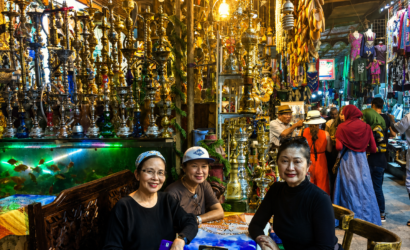
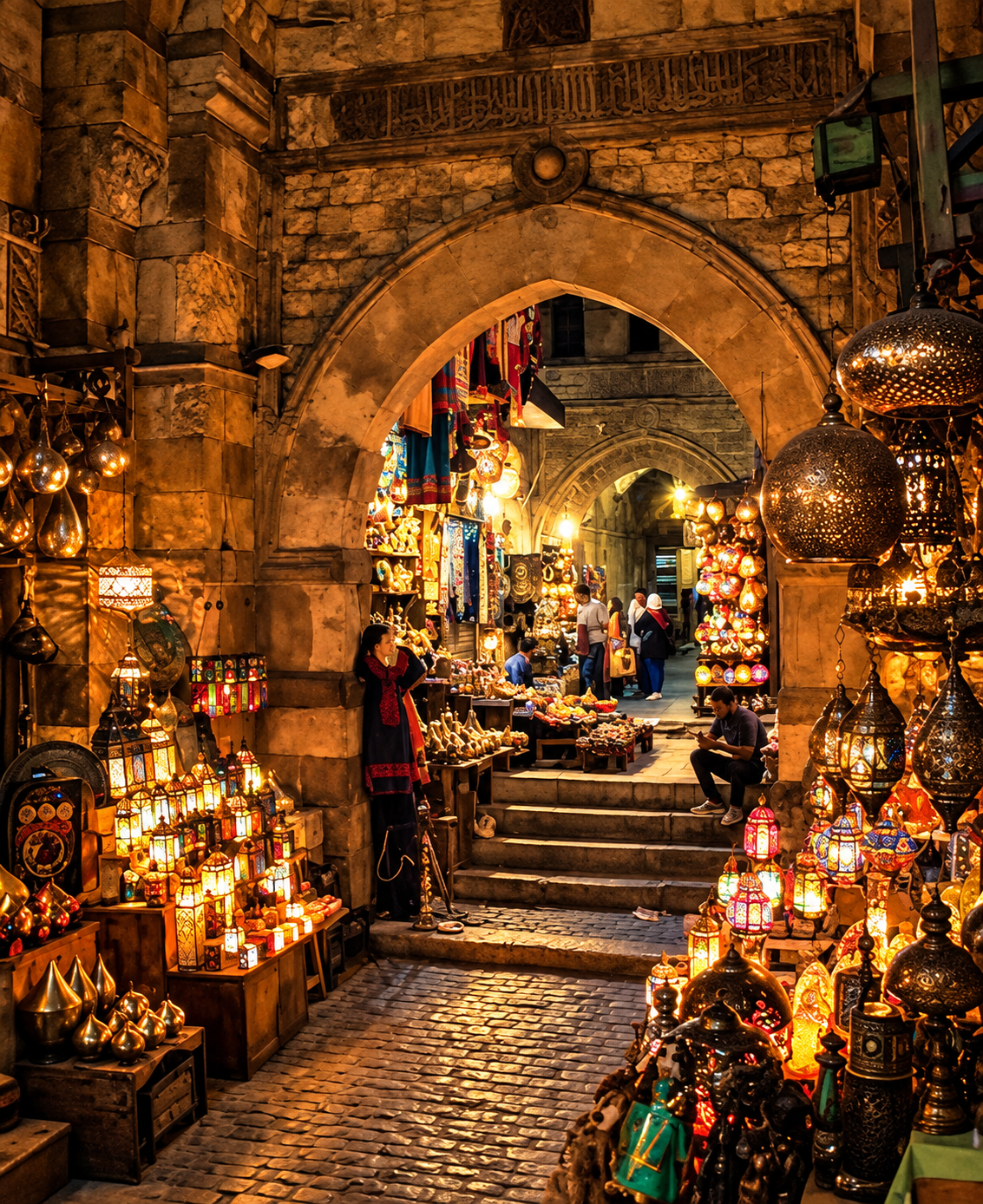
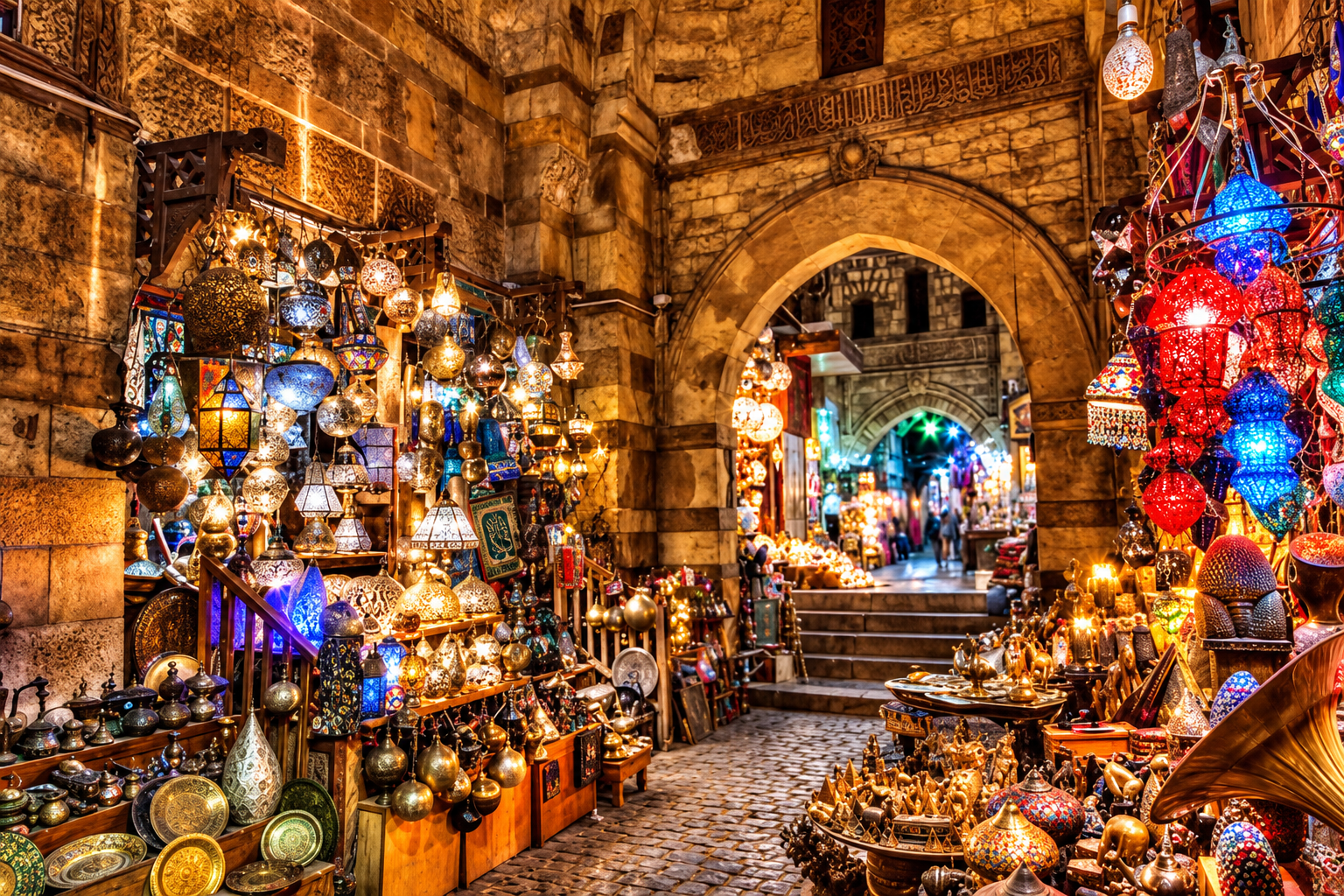
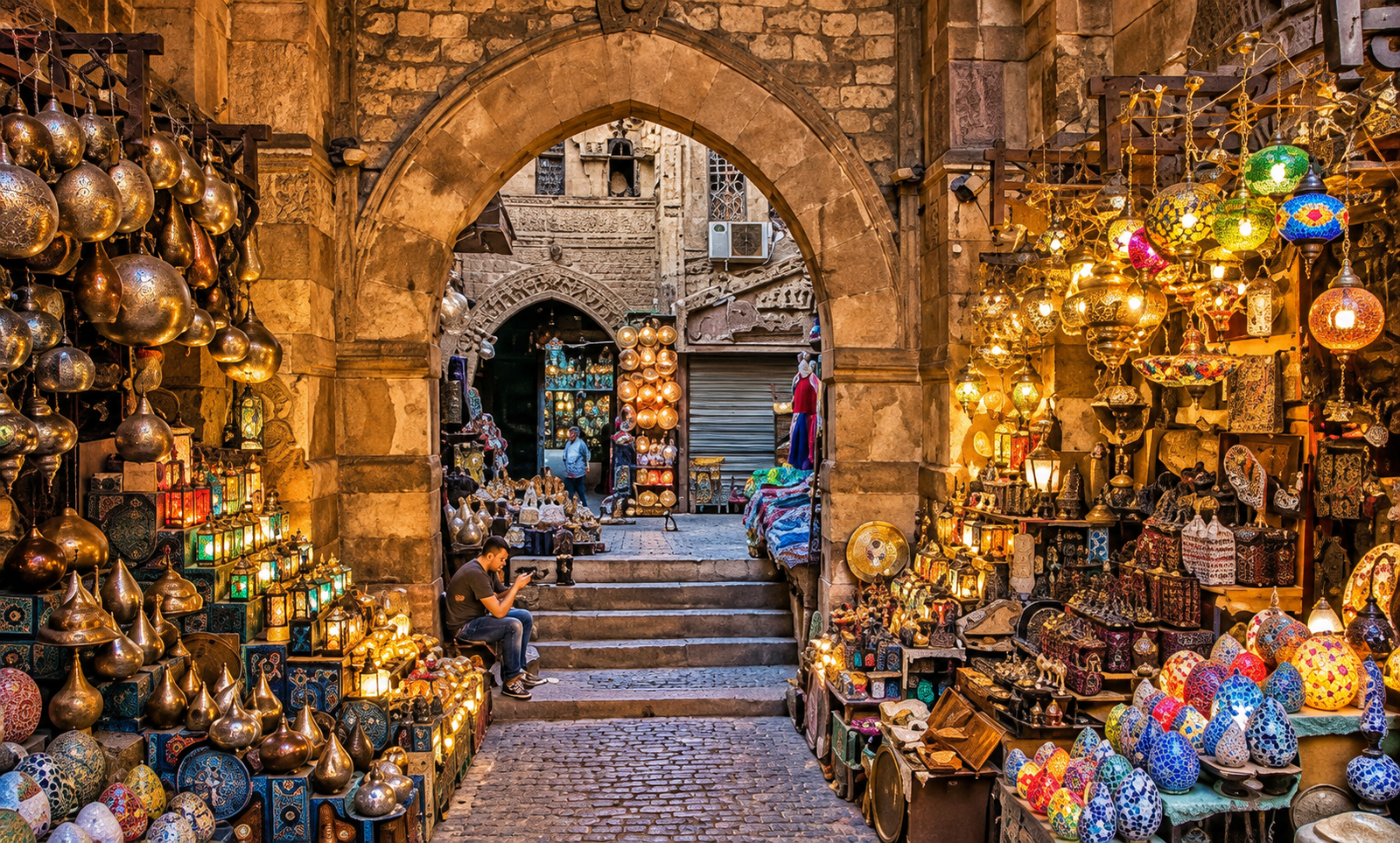
You see colorful lanterns, jewelry, brass objects, textiles, and handmade souvenirs.
You hear the sounds of metal being worked in traditional workshops.
And around every corner, another narrow alley leads into a different part of the market.
More Than a Souvenir Market
Khan El-Khalili is often described as a tourist market, but its history is much deeper.
The area developed as an important commercial center during the Mamluk period.
Today, visitors can find traditional handicrafts, jewelry, decorative objects, textiles, perfumes, spices, leather goods, and metalwork.
The market remains an important part of Cairo’s identity.
The experience becomes much more interesting when you look beyond the souvenirs and pay attention to the people working in the shops.
Some businesses continue traditional techniques, while others have adapted their products to modern visitors.
Discover Egyptian Crafts
One of the most rewarding parts of exploring Cairo’s old markets is discovering traditional craftsmanship.
Egypt has a long history of working with metal, wood, leather, textiles, glass, and other materials.
In Historic Cairo, these crafts are often carried out in small workshops located directly along the old streets.
You may see craftsmen hammering copper, shaping metal, carving wood, stitching textiles, or creating decorative objects.
These workshops provide a glimpse into a side of Cairo that cannot be experienced inside a museum.
The Sounds of the Craftsmen
Some streets in Historic Cairo are strongly associated with particular crafts.
The sounds of traditional workshops can become part of the atmosphere.
The rhythmic sound of metal being hammered is especially distinctive.
Cairo’s official portal highlights Amir El-Geyosh Street, near Bab Al-Futuh and Al-Muizz Street, as an area historically associated with workshops producing food carts and metalwork. بوابة محافظة القاهرة
Walking through these areas gives visitors the opportunity to see craftsmanship happening in real time.
Copper and Brass in Old Cairo
Copper and brass products are among the traditional crafts associated with Cairo’s historic markets.
You may find trays, coffee sets, lanterns, decorative plates, and other objects.
Some pieces are simple and practical.
Others feature detailed patterns and elaborate engraving.
Take time to compare different pieces before buying anything.
Look at the quality of the workmanship, the weight, the finishing, and the details.
The most interesting souvenirs are often those that have a connection to Egyptian craftsmanship rather than mass-produced items.
Egyptian Lanterns
Traditional Egyptian lanterns are another recognizable feature of the old markets.
Known locally as fanous, lanterns come in many shapes and designs.
Some are made from metal with colored glass panels.
Others are elaborately decorated with geometric patterns.
When illuminated at night, the colored glass creates beautiful patterns of light.
They can make distinctive souvenirs and also provide a connection to Egypt’s traditional decorative arts.
Perfume and Essential Oils
Another part of the traditional market experience is exploring perfume shops.
Egypt has a long tradition of producing and selling fragrances and aromatic oils.
Inside some shops, visitors can discover bottles containing different scents and blends.
The experience is often interactive, with shopkeepers explaining the differences between fragrances and allowing visitors to smell various options.
If you are interested in buying perfume, take your time and choose something because you genuinely like it rather than because you feel pressured to purchase.
Spices and Egyptian Flavors
Markets are also a great place to discover the aromas of Egyptian cuisine.
Spices, herbs, tea, dried flowers, and other ingredients can be found throughout the traditional markets.
The colors and smells create a completely different atmosphere from a modern supermarket.
For travelers interested in Egyptian food, walking through a spice market can be almost as interesting as visiting a restaurant.
It provides an introduction to the ingredients used in everyday Egyptian cooking.
Traditional Egyptian Coffee
Coffee is an important part of Cairo’s social culture.
A traditional ahwa, or Egyptian coffeehouse, is more than somewhere to have a drink.
It can be a meeting place where people talk, play backgammon, read newspapers, watch the street, or simply spend time with friends.
Coffee is commonly served strong and aromatic, often in a small cup.
Tea is equally popular, and you will frequently see glasses of hot tea on tables throughout Cairo.
El-Fishawy Café
One of the most famous traditional cafés in Cairo is El-Fishawy Café, located in the heart of Khan El-Khalili.
According to Cairo’s official portal, the café dates back to 1771 and became a gathering place for artists, writers, intellectuals, and prominent visitors. بوابة محافظة القاهرة
Its mirrors, traditional furniture, narrow passageway, and location in the middle of the historic market contribute to its atmosphere.
Sitting here after walking through the market gives you a chance to slow down and simply watch Cairo happening around you.
Naguib Mahfouz and Cairo’s Coffeehouse Culture
Cairo’s cafés have played an important role in the city’s literary and cultural life.
The famous Egyptian writer Naguib Mahfouz was associated with El-Fishawy Café, where he spent time and wrote.
The café has also been associated with many Egyptian artists, writers, and intellectuals over the years. بوابة محافظة القاهرة
This connection between coffeehouses and intellectual life is an important part of Cairo’s cultural identity.
Beyond Khan El-Khalili
Although Khan El-Khalili is the most famous market, it is not the only place where you can experience everyday Cairo.
Historic Cairo contains numerous streets and commercial areas with different specialties.
Moving away from the main tourist lanes can reveal a more local atmosphere.
You may find shops selling household goods, clothing, fabrics, tools, food, spices, and traditional products used by Cairo residents.
This is where the city becomes less about sightseeing and more about everyday life.
Al-Muizz Street
Al-Muizz Street is one of the most important historic streets in Cairo.
The street connects Bab Al-Futuh with Bab Zuweila and is surrounded by historic architecture, shops, workshops, cafés, and markets.
Official tourism information describes the area as a place where visitors can see spectacular architecture alongside artisans and craftsmen at work, as well as traditional cafés and restaurants. Experience Egypt
This makes Al-Muizz an ideal part of a market and culture experience.
You can combine history with local life in the same walk.
The Tentmakers’ Bazaar
Another fascinating craft tradition can be found near Bab Zuweila at the Tentmakers’ Bazaar, also known as Khayamiya.
Here, artisans create colorful appliqué textiles using traditional techniques.
The designs can include geometric patterns, flowers, Islamic motifs, and other decorative elements.
Unlike mass-produced souvenirs, handmade pieces provide a direct connection to the artisan who created them.
For travelers interested in Egyptian crafts, this is one of the most distinctive experiences in Historic Cairo.
Traditional Food Along the Way
Exploring local Cairo also means discovering its food.
Depending on the route, you can encounter Egyptian specialties such as:
- Koshari
- Ful medames
- Taameya
- Hawawshi
- Egyptian bread
- Grilled meats
- Fresh juices
- Mint tea
- Egyptian coffee
- Traditional sweets
Street food can provide a completely different experience from eating in a hotel restaurant.
It is fast, inexpensive, flavorful, and closely connected to everyday Cairo life.
Cairo’s Street Life
One of the most interesting aspects of exploring local markets is simply watching the city.
A delivery cart moves through a narrow street.
A craftsman works inside a tiny workshop.
A family stops for tea.
A shopkeeper arranges products outside his store.
Friends sit together at an ahwa.
Children move through the neighborhood after school.
These ordinary moments reveal something important about Cairo.
The city is not just a collection of ancient monuments.
It is a living place where millions of people continue traditions and routines within a historic urban landscape.
Photography in the Markets
For photographers, traditional Cairo offers endless opportunities.
You can photograph:
- Market streets
- Craftsmen at work
- Traditional lanterns
- Copper workshops
- Old doors
- Historic architecture
- Coffeehouses
- Spices
- Local food
- Street scenes
- Traditional signs
- Narrow alleyways
The best photographs are often spontaneous.
Instead of photographing only monuments, look for moments that show movement, craftsmanship, and everyday life.
Always be respectful when photographing people and ask permission for close-up portraits.
A Different Kind of Cairo Tour
A traditional market and coffee experience is different from a standard sightseeing tour.
There is no need to rush from one monument to another.
The goal is to walk, observe, taste, photograph, talk, and experience the atmosphere.
You might spend time watching a craftsman work, drinking coffee in an old café, exploring a market alley, tasting Egyptian food, and then continuing toward another historic neighborhood.
This slower pace allows you to experience Cairo rather than simply see it.
The Best Time to Explore
Late afternoon can be a particularly atmospheric time to explore the old markets.
The temperature becomes more comfortable, shops remain active, and the streets gradually become livelier.
As evening approaches, traditional lanterns and shop lights create a warm atmosphere throughout the market.
For photographers, the changing light can also provide excellent opportunities.
An afternoon that continues into the evening allows you to experience both the historic architecture in daylight and the lively market atmosphere after dark.
What to Expect
Cairo’s traditional markets can be busy and crowded.
The streets can be narrow, and the environment can feel energetic.
Expect shopkeepers to speak with you, offer products, and sometimes negotiate prices.
Bargaining is part of the experience in many traditional markets, but it is best approached with a smile and good humor.
If you do not want to buy something, a polite “thank you” is usually enough to continue walking.
Experience the Real Cairo
The real Cairo is found not only inside museums and monuments.
It is found in the markets.
It is in the sound of a craftsman’s hammer.
It is in the smell of freshly brewed coffee.
It is in a small table outside an old ahwa.
It is in colorful lanterns hanging above a narrow alley.
It is in conversations between shopkeepers and customers.
It is in the traditional crafts that continue despite the city’s rapid modernization.
Cairo’s historic markets preserve a connection between the past and present, allowing visitors to experience traditions that remain part of everyday life. Experience Egypt
Discover Cairo Like a Local
If you want to see a side of Cairo beyond the pyramids, museums, and major tourist attractions, spend a day exploring its markets, workshops, cafés, and old streets.
Walk through Khan El-Khalili.
Explore Al-Muizz Street.
Watch craftsmen at work.
Taste traditional Egyptian food.
Drink coffee or tea at a historic ahwa.
And take your time experiencing the atmosphere of one of the world’s most fascinating cities.
The real Cairo isn’t something you simply visit. It’s something you walk through, taste, hear, and experience.
Frequently Asked Questions
FAQs
The tour usually takes approximately 4–6 hours, depending on the selected itinerary and time spent at each location.
Yes, the experience can be arranged as a private tour with a dedicated guide and private transportation.
You will explore traditional Cairo markets, local craft workshops, historic streets, and authentic Egyptian coffeehouses, with opportunities to interact with local artisans and discover everyday Cairo.
Yes, a professional English-speaking local guide accompanies the experience and explains the history, culture, crafts, and traditions of the neighborhoods you visit.
Yes. The tour provides opportunities to browse and purchase traditional handicrafts, lanterns, textiles, spices, jewelry, ceramics, and other local products.
The experience can include a stop at a traditional Egyptian coffeehouse. The cost of drinks depends on the selected package.
The focus is on authentic local markets and artisan workshops, rather than mandatory souvenir shopping. Purchases are optional.
Yes. You can experience traditional Egyptian café culture and try local drinks during the tour.
Food is not included in the standard package unless specifically mentioned, but local snacks or food tastings can be added.
Comfortable walking shoes and light, respectful clothing are recommended because the tour involves walking through traditional neighborhoods and markets.